Stories

Heat map of Lucknow displayed alongside a modern residential building, illustrating the urban heat island effect and rising temperatures across different neighbourhoods due to rapid urban development.

The Heat Map of Lucknow: Why Some Neighbourhoods Are Feeling the Burn this year

As summers grow longer and more intense, Lucknow’s rising temperatures are exposing a stark reality: not every neighbourhood heats up the same way. Localities dominated by concrete, glass façades and sparse tree cover are turning into urban heat islands, often recording noticeably higher temperatures than greener pockets of the city. In Lucknow areas with dense commercial activity and rapid construction tend to retain heat well into the night, making evenings increasingly uncomfortable for residents. In contrast, neighbourhoods with mature trees, parks and open spaces experience relatively cooler conditions, underscoring the role of urban greenery in regulating temperatures. Think Lucknow Cantt and Gomtinagar Extension where dense green cover still is preserved and the drop in temperature is quite evident as you drive through. Environmental experts say the city’s shrinking green cover, expanding road network and increasing vehicular emissions are amplifying the heat stress, explains a climate change activist, “Trees provide shade, reduce surface temperatures and improve air quality, while parks and water bodies help moderate the local climate. As development accelerates, striking a balance between infrastructure and ecology has become a pressing challenge with the latter always losing out.” The shift now is quite inevitable. The residents are adapting in their own ways. Morning walks are shifting to earlier hours, rooftop gardens are gaining popularity, and many housing societies are planting native trees to create cooler micro-climates. Households are also investing in reflective roof coatings, shaded balconies and energy-efficient cooling systems to reduce indoor heat. Though urban planners believe the solution lies not only in individual efforts but in city-wide planning. Expanding green corridors, protecting existing parks, promoting rainwater harvesting and encouraging cool-roof initiatives can help reduce the urban heat island effect. Experts also advocate integrating climate resilience into future building and road projects rather than treating it as an afterthought. With climate change making extreme heat more frequent, Lucknow’s battle against rising temperatures is no longer just about surviving summer. It is about reimagining the city’s growth so that development and environmental sustainability go hand in hand, ensuring that every neighbourhood remains liveable in the years ahead. Will be able to do that and salvage the damage done to mother earth on time so that we can leave the next generation a clean and green planet? Only Time Will Tell.
Read more
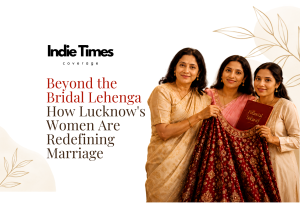
Three women from different generations stand together smiling, holding a traditional bridal lehenga and a financial savings book, symbolising the evolving priorities of modern women in Lucknow as they balance marriage, financial independence, and personal choice.

Beyond the Bridal Lehenga: How Lucknow’s Women Are Reimagining Marriage

Lucknow has always carried itself with an unhurried grace. Its tehzeeb is reflected not only in its language but also in the way life unfolds—measured, courteous, and deeply rooted in tradition. “Muskuraiye, aap Lucknow mein hain.” It is a city where customs are cherished, families remain closely knit, and marriage has long been regarded as life’s inevitable milestone. Yet beneath this familiar rhythm, another story is taking shape. A growing number of women are choosing to step into their thirties without the urgency to marry. It is not an act of rebellion against tradition, nor a rejection of love. It is, instead, a thoughtful assertion of choice. For decades, her script was largely predetermined. A good education was encouraged, but often with an unspoken deadline. Graduation was followed by family introductions, horoscope matching, and eventually the bridal lehenga. Marriage was less a personal decision than a social expectation, a milestone to be achieved at the “right” age. Today’s contemporary women are approaching that script differently. They have witnessed the quiet compromises that shaped the lives of many women before them, the careers placed on hold, ambitions adjusted to accommodate family expectations, and the invisible emotional labour that often went unacknowledged. Their mothers and grandmothers built homes with extraordinary resilience, but they also left behind lessons that the next generation has absorbed with remarkable clarity. As a result, a different question is emerging. Rather than asking, “When should I get married?” many are asking, “Will this marriage enrich the life I have worked so hard to build?” That subtle shift changes everything. Financial independence is no longer viewed as an attractive quality; it is a foundation. Young women are investing in equity markets instead of only accumulating jewellery, building businesses instead of waiting for financial security through marriage, and travelling alone with the confidence once reserved for men. Their aspirations extend beyond professional success; they seek emotional security, intellectual companionship, and relationships built on mutual respect. The search is no longer for someone to complete them. It is for someone who can walk beside them as an equal. Compatibility has begun to outweigh community approval. Emotional maturity is valued above social status. Shared values matter more than impressive wedding ceremonies. Marriage is still deeply desired by many, but only if it enhances, rather than diminishes, the life they have consciously created. Choosing to marry later—or choosing not to marry at all—is gradually becoming less of a social anomaly and more of a personal decision. The measure of a woman’s success is slowly shifting away from marital status toward the quality of the life she builds for herself. The modern woman of Lucknow is not anti-marriage. She is profoundly pro-respect. She believes that companionship should amplify her life, not ask her to shrink it. She understands that love flourishes best where dignity, equality, and freedom coexist. Perhaps that is the city’s quiet revolution. In a place celebrated for preserving its heritage, its women are redefining another tradition not by rejecting it, but by insisting that it evolve with them. And so, the question echoing through Lucknow’s historic homes is no longer merely, “When are you getting married?” Increasingly, it is becoming something far more meaningful: “Are you marrying for the right reasons?”
Read more
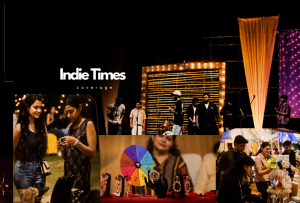
A collage showcasing highlights from La Flea Summer Affair 2026 featuring a live stage performance, visitors exploring handcrafted products, colorful artisan stalls, and attendees enjoying the lively evening market.

La Flea Summer Affair Brings Four Days of Shopping, Food & Fun to Lucknow

Lucknow witnessed a vibrant celebration of creativity, shopping and entertainment as Knocksense’s La Flea Summer Affair transformed  UP Darshan Park into a buzzing lifestyle destination. Spread over four days, the much-awaited summer edition attracted families, youngsters, food enthusiasts and shoppers, offering a perfect blend of retail therapy and festive experiences. The event featured a curated line-up of homegrown brands showcasing fashion, jewellery, lifestyle products, home décor, handcrafted goods and unique accessories. Visitors explored colourful stalls while supporting local entrepreneurs and emerging businesses, making the flea market a platform that celebrated creativity and innovation. Food remained one of the biggest attractions, with an exciting mix of street food, regional delicacies, desserts and refreshing summer beverages. Live music performances, dance acts, interactive games and engaging activities kept the atmosphere lively throughout the festival, creating memorable moments for people of all age groups. The beautifully decorated venue, vibrant photo corners and energetic ambience made La Flea Summer Affair a favourite among social media enthusiasts, while families enjoyed a relaxed day out amidst music, shopping and entertainment. Over the years, La Flea Affair has evolved into one of Lucknow’s most anticipated lifestyle festivals, providing a valuable platform for local businesses, artists and creators to connect directly with the city’s growing community of shoppers and culture lovers. The Summer Affair once again lived up to its reputation, bringing together commerce, culture and community under one roof, and reaffirming Knocksense’s commitment to promoting local talent while offering Lucknowites an unforgettable festive experience.
Read more
"Mahimma Bhardwaj, acclaimed Indian lyricist and composer""Mahimma Bhardwaj, acclaimed Indian lyricist and composer"

“Music Must Evolve, But Its Soul Must Remain” – Mahimma Bhardwaj

Having written lyrics and composed music for legends like Asha Bhosle and Adnan Sami, acclaimed lyricist Mahimma Bhardwaj shares her insights with Editor, Indie Times. In an honest conversation, she explains why today’s music must get to the point faster to capture the attention of Gen Z listeners, without losing its soul or poetic depth. 1. Many people believe that today music has become more trend -driven  than timeless. In your view what has changed over the years? Music, like everything else, evolves with time, so it’s only natural for songs to change as well. In the past, songs were much longer, often featuring three or four antras and taking their time to tell a story. Today, however, audience preferences have shifted. Most people have busy lifestyles and shorter attention spans, so they tend to prefer music that is quick, engaging, and easy to consume in just a few minutes. As a result, the music industry has adapted to meet these changing tastes, creating shorter songs that appeal to modern listeners. However, at the same time, I also feel that there is a growing appreciation for classical and traditional music. We can see this in many reality shows, where a large number of young singers are choosing semi-classical and traditional styles, proving that these genres continue to resonate with the younger generation. While music is evolving, its roots are still valued and celebrated. But some songs will always be timeless and such songs are being created even today. 2. What can artists do to bring back the emotional depth and lasting appeal that older songs were know for? Every artist must have deep sincerity towards their art. Jitni imandari se woh apni kala se jude rahenge, utni hi lasting appeal unki kala mein nazar aayegi. Emotional depth varies from person to person, whether they are poets, singers, or lyricists, but woh jitni shiddat se apni nazmein aur geet rachate hain, uska impact zaroor padta hai. It’s not that songs today lack emotional depth, but we also need to understand what today’s audience is looking for. If we start composing and writing songs exactly the way they were created in the bygone days, people may not connect with them. Aaj ke zamane mein woh approach waise nahi chalegi. 3.Gen Z consumes music through reels, short videos, and streaming platforms. How can lyricists and composers create songs that resonate with young audiences without compromising on quality or poetic expression? Yes, Gen Z consumes content very differently, and isiliye aaj ke singers, composers, and lyricists have to be extremely sharp in their approach. Today, we don’t have the luxury of taking our time to build up to the main message in a song. If we want to connect with young audiences, the emotion or idea we want to express has to come across within the first few seconds. Only then does it truly register with them. At the same time, creating meaningful music has become more challenging because everyone is trying to do everything. A singer is also writing, composing, and often handling the lyrics. While versatility is valuable, it can sometimes come at the cost of excellence. I believe artists create their best work when they focus on and refine their core strengths instead of trying to take on every role. 4. Indian Music has a rich legacy of poetry, storytelling, and classical influence. How can we reconnect young listeners with these traditions while making them feel relevant and contemporary? It is the responsibility of our generation to keep alive the legacy of stalwarts like Gulzar, Kaifi Azmi, Sahir Ludhianvi, Shailendra, and many others. We need to create more engaging content around their work on social media platforms such as Facebook and Instagram so it reaches younger audiences. Only then will they discover the richness of the music and poetry of an earlier era and appreciate the timeless brilliance of these masters. Today, many in Gen Z are unfamiliar with the legends who shaped Indian music and cinema. If we truly want to preserve their legacy, we must introduce the younger generation to their work and help them understand the values they stood for. Most importantly, they should know that there are no shortcuts to lasting success, hard work, dedication, and continuous learning are the only paths to reaching the stars. 5. Whom does the primary responsibility for reviving meaningful music lies primarily with lyricists and composers, or do audiences and digital platforms, schools, and families also have an important role to play? The responsibility doesn’t rest with one individual alone—it is shared by all of us. Schools, teachers, families, and communities all have an important role to play. At the same time, lyricists, directors, singers, composers, and musicians must create content with utmost care, sensitivity, and a strong sense of moral responsibility. The stories and songs we share through cinema and OTT platforms should reflect the highest creative and ethical standards. As a nation, we must collectively ensure that the content reaching our younger generation is thoughtful and enriching, just as we would for our own children. Our political leaders, too, have a role in encouraging and supporting the creation and dissemination of meaningful, high-quality content that positively shapes young minds. 6. If you had the opportunity to give one message to aspiring lyricists, musicians, and young listeners about preserving the soul of Indian music while embracing  modern trends, what would it be? If we want to keep our traditional music and art forms alive, I feel uski rooh ko zinda rakhna padega. We must ensure that if we want our children to become artists, they develop the habit of reading the works of the stalwarts who came before them. Padhne se zehan viksit hota hai, and it helps the younger generation aspiring to become artists, writers, directors, and lyricists to think more deeply, build a stronger vocabulary, and process ideas better. Those who want to become composers should also learn classical music, because it is the foundation of creating
Read more


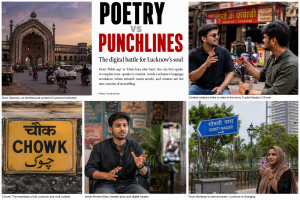
How Lucknow’s Tehzeeb Went from Poetry to Punchlines and Won the Internet

Lucknow was once a city where every sentence carried grace, where wit was refined, and where conversations felt like poetry in motion. The guardians of culture were poets, writers, and raconteurs gathered in mushairas and mehfils. Today, the city’s loudest voices aren’t reciting verses under chandeliers, they’re creating content on smartphones. In 2026, the fight for Lucknow’s cultural soul has moved from drawing rooms to digital feeds. Instagram Reels, YouTube Shorts, and viral comedy sketches have become the new battlegrounds where language, identity, and tradition are being reimagined for a generation that scrolls faster than it reads. The storytellers have changed. The stage has changed. And perhaps, so has Lucknow itself. From “Pehle Aap” to “Hum Bata Rahe Hain” The classic Lucknowi phrase “Pehle Aap” once symbolized the city’s elegance. Today, creators have replaced it with a more direct, earthy style. Hum has become the new badge of authenticity. Words like Bawa, Chacha, and local slang are generating millions of views because they reflect the language people actually speak in tea stalls, markets, hostels, and neighborhoods. Bollywood’s Lucknow Connection Ironically, Bollywood has long recognized the charm of Lucknow’s language.One of the most celebrated films shot extensively in Lucknow, the movie Jolly LLB 2 starring Akshay Kumar, captured the city’s everyday humour and street-smart conversations. Similarly, Daawat-e-Ishq showcased the warmth and linguistic sweetness associated with Awadhi culture.Perhaps no dialogue captures Lucknow’s spirit better than the old Nawabi ethos: Janab, Lucknow mein baat bhi tehzeeb se hoti hai. While not a famous film quote, it reflects the city’s cultural DNA that filmmakers have repeatedly tried to capture.Today’s creators argue that language evolves with its people. A generation raised on social media doesn’t want scripted sophistication. It wants authenticity. The creators’ message is simple: Why imitate Delhi or Mumbai when Lucknow itself is a brand? Their reels feature local accents, neighbourhood references, and cultural quirks that were once considered too regional” for mainstream media. The city’s traditionalists fear that viral content is reducing Lucknow’s rich linguistic heritage to mere comedy.  But supporters see something entirely different. For the first time, local dialects are not being mocked by outsiders, they are being celebrated by insiders. The result is a fascinating cultural transformation: Lucknow is no longer choosing between tehzeeb and trendiness. It is creating a new identityLucknow was once a city where every sentence carried grace, where wit was refined, and where conversations felt like poetry in motion. The guardians of culture were poets, writers, and raconteurs gathered in mushairas and mehfils. Today, the city’s loudest voices aren’t reciting verses under chandeliers, they’re creating content on smartphones. In 2026, the fight for Lucknow’s cultural soul has moved from drawing rooms to digital feeds. Instagram Reels, YouTube Shorts, and viral comedy sketches have become the new battlegrounds where language, identity, and tradition are being reimagined for a generation that scrolls faster than it reads. The storytellers have changed. The stage has changed. And perhaps, so has Lucknow itself. From “Pehle Aap” to “Hum Bata Rahe Hain” The classic Lucknowi phrase “Pehle Aap” once symbolized the city’s elegance. Today, creators have replaced it with a more direct, earthy style. Hum has become the new badge of authenticity. Words like Bawa, Chacha, and local slang are generating millions of views because they reflect the language people actually speak in tea stalls, markets, hostels, and neighborhoods. Bollywood’s Lucknow Connection Ironically, Bollywood has long recognized the charm of Lucknow’s language.One of the most celebrated films shot extensively in Lucknow, the movie Jolly LLB 2 starring Akshay Kumar, captured the city’s everyday humour and street-smart conversations. Similarly, Daawat-e-Ishq showcased the warmth and linguistic sweetness associated with Awadhi culture.Perhaps no dialogue captures Lucknow’s spirit better than the old Nawabi ethos: Janab, Lucknow mein baat bhi tehzeeb se hoti hai. While not a famous film quote, it reflects the city’s cultural DNA that filmmakers have repeatedly tried to capture.Today’s creators argue that language evolves with its people. A generation raised on social media doesn’t want scripted sophistication. It wants authenticity. The creators’ message is simple: Why imitate Delhi or Mumbai when Lucknow itself is a brand? Their reels feature local accents, neighbourhood references, and cultural quirks that were once considered too regional” for mainstream media. The city’s traditionalists fear that viral content is reducing Lucknow’s rich linguistic heritage to mere comedy.  But supporters see something entirely different. For the first time, local dialects are not being mocked by outsiders, they are being celebrated by insiders. The result is a fascinating cultural transformation: Lucknow is no longer choosing between tehzeeb and trendiness. It is creating a new identity.
Read more

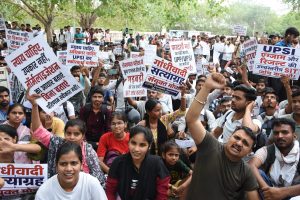
From Memes to Movement: How the Cockroach Janta Party Brought Students to Lucknow’s Streets

Lucknow’s Eco Garden witnessed an unusual yet powerful display of public dissent as hundreds of students and job aspirants gathered under the banner of the Cockroach Janta Party (CJP) to protest recurring examination paper leaks and recruitment irregularities. What began as an online movement known for its satirical memes and sharp social commentary has evolved into a grassroots platform channeling the frustrations of thousands of young people. On Sunday, that digital momentum spilled onto the streets, transforming the protest venue into a sea of placards, slogans, and demands for accountability. Amid a heavy deployment of police and Rapid Action Force personnel, protesters voiced concerns over repeated examination cancellations, delayed recruitments, and what they described as the systematic erosion of opportunities for deserving candidates. Calls for the resignation of the Union Education Minister echoed through the gathering as participants expressed anger over what they see as a failure to safeguard the integrity of competitive examinations. Several speakers addressed the crowd, highlighting the emotional and financial toll borne by students who spend years preparing for exams only to see their efforts undermined by leaks and administrative lapses. Many described the issue as a theft of their future and demanded stringent action against those responsible. Despite the charged atmosphere and the large turnout, the protest remained peaceful and disciplined. Volunteers coordinated crowd movement, and participants adhered to instructions from organizers, underscoring their intent to register dissent through democratic means. For many in attendance, the gathering was about more than a single examination it was a call for transparency, fairness, and the restoration of trust in India’s recruitment and education systems.
Read more

Gen Z’s Love Affair with Chikankari Is Giving Lucknow’s Heritage a Stylish New Twist

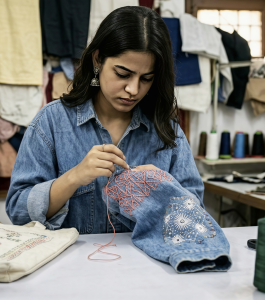
In the narrow lanes and bustling markets of Lucknow, a quiet fashion revolution is unfolding with a timeless craft. The city’s iconic Chikankari, once associated primarily with timeless kurtas and treasured family heirlooms, is finding a bold new audience in Gen Z. But this generation isn’t simply wearing the craft, they’re reimagining it. At a time when fast fashion is facing growing scrutiny, young fashion enthusiasts are turning to something far more meaningful: the wardrobes of their parents and grandparents!  Vintage Chikankari kurtas, dupattas, and tunics are being rediscovered, reworked, and styled with an unmistakably contemporary edge. Think delicate hand embroidery paired with oversized cargo pants, classic white kurtas transformed into cropped jackets, and heirloom dupattas layered over streetwear-inspired silhouettes. For Gen Z, fashion is no longer just about trends; it is about identity, sustainability, and storytelling. By upcycling existing garments instead of purchasing new ones, they are extending the life of cherished pieces while keeping Lucknow’s centuries age old craft relevant in a rapidly changing world. Talk of innovation! This approach reflects a larger shift in the fashion industry toward conscious consumption. Chikankari’s enduring appeal lies in its remarkable ability to evolve without losing its essence. Celebrated designer Sandeep Khosla, who has spent decades bringing Indian craftsmanship to international audiences, has often spoken about the timeless nature of the embroidery, simultaneously contemporary and eternal. The beauty of this movement lies in the unexpected contrasts it creates. Delicate handwork meets relaxed tailoring. Tradition collides with street style. Heritage becomes a canvas for self-expression. The end result, simply breathtaking! Local style curator and design student Kabir Sharma captures this sentiment perfectly,  “There is something incredibly powerful about taking an oversized vintage Chikankari kurta from my dad’s closet, cropping it, and pairing it with baggy cargo pants. We aren’t destroying the craft; we’re giving it a second life. It’s slow fashion with a street edge.” The adaptability of Chikankari has long been celebrated by famed designers like Anita Dongre, who has championed its effortless versatility across both formal and everyday wardrobes. She credits this flexibility as precisely what makes the craft so appealing to a younger generation eager to experiment while remaining connected to its roots. What makes this trend particularly exciting is that it feels deeply personal. Every upcycled kurta carries family memories. Every reimagined silhouette tells a story of continuity rather than replacement. These garments are not being preserved behind glass; they are being worn, loved, and reinterpreted for a new era. As a result, Lucknow’s heritage is no longer confined to tradition, it  is actively shaping the future of fashion. Through creativity, sustainability, and a genuine appreciation for craftsmanship, Gen Z is proving that the most exciting trends are often the ones that honour the past while confidently stepping into the future. This is more than a fleeting style moment. It is a cultural movement, one that is ensuring Lucknow’s beloved Chikankari remains as relevant on today’s streets as it has been for generations in a new avatar everytime.
Read more

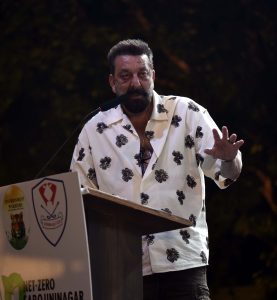
Sanjay Dutt Champions Green Cause at Lucknow Golf Club Event

Lucknow: The city’s growing commitment to sustainability received a boost on World Environment Day as actor Sanjay Dutt attended the Green Shift Golf Tournament Awards Ceremony at the  Lucknow Golf Club. The event brought together sports enthusiasts, environmental advocates and civic leaders to celebrate excellence in golf while promoting ecological responsibility. Joining the actor was Rajeshwar Singh, BJP MLA from Sarojini Nagar who has been actively associated with environmental and developmental initiatives in the region. Both dignitaries spoke about the importance of citizen participation in making Lucknow cleaner, greener and more sustainable. Addressing the gathering, Dutt reiterated his commitment to environmental causes and recalled his personal connection with the city. Referring to the launch of the Net Zero Sarojini Nagar 2040 initiative earlier this year, he said Lucknow occupies a special place in his family’s history. The actor shared that following Partition, his father, the late Sunil Dutt, first arrived in Lucknow before settling elsewhere, making his visits to the city particularly meaningful. The highlight of the evening was the presentation of awards to the tournament winners. Among those honoured were Mr. Pankaj Agarwal (overall championship winner), Karmanya Dutt Tiwari (Junior category winner), A.S. Kapoor (Senior veteran category),Harsh Kumar Rastogi(Senior Veteran Category),Aadhar Jain, Dhruv Goyal and Utsav Mishra (Handicapped category) who received trophies and accolades from Dutt amid enthusiastic applause from participants and guests. The event witnessed a strong turnout of golfers, business leaders and social figures, all united by a common message of environmental stewardship. Organisers said the Green Shift initiative aims to encourage sustainable practices through community engagement and public awareness. With influential personalities lending their support to green causes, initiatives such as these are expected to strengthen Lucknow’s journey towards becoming a more environmentally conscious and sustainable city. The evening concluded with a renewed call for collective action to preserve the city’s ecological future.
Read more

Ground Reality Meets Stardom at Amar Ujala Samwad 2026

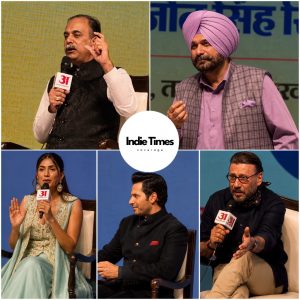
The Amar Ujala Samwad 2026 Conclave brought together an eclectic mix of political leaders, policymakers, and film personalities, creating a platform where governance, social issues, and personal journeys converged. Held in Lucknow, the event offered audiences a unique opportunity to hear directly from influential voices shaping contemporary India. Governance with a Human TouchThe political sessions focused on development, public welfare, and the evolving aspirations of citizens across Uttar Pradesh.Speaking on healthcare reforms, Deputy Chief Minister Brajesh Pathak emphasised that quality healthcare should not remain a privilege for a select few. Highlighting the state’s efforts to strengthen medical infrastructure and improve accessibility, he underscored the importance of ensuring dignified and affordable healthcare services for every citizen.Former cricketer and politician Navjot Singh Sidhu brought his signature energy and wit to the stage while addressing issues of governance and public accountability. He stressed the importance of transparent leadership and urged policymakers to remain connected to the concerns and expectations of the people they serve. According to Sidhu, empathy remains one of the most essential qualities of effective leadership.Conversations Beyond the Silver ScreenThe entertainment segment moved beyond film promotions, offering audiences a glimpse into the personal and professional journeys of some of Bollywood’s most recognised faces.Actress Mrunal Thakur spoke candidly about her evolution as a performer and the challenges of portraying complex female characters. She noted that modern audiences increasingly value authenticity and emotional depth, encouraging actors to move beyond conventional portrayals.Actor Varun Dhawan reflected on the changing landscape of Bollywood and audience expectations. Discussing his upcoming project, he highlighted how digital platforms and evolving viewer preferences have transformed storytelling, making adaptability essential for artists seeking long-term relevance.The most heartfelt moments of the conclave came from veteran actor Jackie Shroff. Fondly known as Jaggu Dada, Shroff shared memories of his humble beginnings and spoke passionately about environmental conservation. Encouraging people to plant more trees and spend meaningful time with their families, he also raised concerns about the growing pressures faced by children in an increasingly digital world.More Than HeadlinesAmar Ujala Samwad 2026 demonstrated the power of meaningful dialogue by bringing together diverse perspectives under one roof. From discussions on healthcare and governance to reflections on cinema, personal growth, and social responsibility, the conclave reinforced a simple yet powerful truth: whether through public policy or storytelling, the ultimate objective remains the same, making a positive impact on people’s lives.
Read more

Do Pets Have a Voice: Exploring the Art of Animal Communication

For generations, pet owners have wished they could understand what goes on inside their dogs’ minds. Today, a growing number of Indians are turning to “dog whisperers,” animal communicators, and pet psychics who claim to bridge the communication gap between humans and their beloved companions.  Indie Times explores this interesting and growing trend in the city.  A pet parent from South City, Lucknow, recalls being stunned during a session with a pet communicator. “She told me that two of my dogs were upset because I never took them out for ice cream drives and only took the third dog along,” she says. “She was absolutely right. The other two suffer from motion sickness, so I never take them in the car.” Another pet parent from Gomti Nagar turned to a pet communicator when her dog showed little improvement despite receiving the best veterinary care. The message she received was unexpected. “The communicator said my dog was mirroring my own neglect of my health,” she says, visibly emotional. “She told me that dogs sometimes absorb their owners’ emotional and physical stress to reflect behaviours and patterns that need attention. Whether one believes it or not, the experience made me rethink how I was caring for myself.” As India’s pet care industry expands and pets increasingly become family members, services that promise deeper emotional connections are finding a receptive audience. Animal communicators say they can intuitively interpret a pet’s emotions, preferences, fears, and even messages they wish to convey to their owners. Sessions are often conducted over video calls, photographs, or in person, with fees ranging from a few hundred to several thousand rupees. Many pet parents seek these services when dealing with behavioral issues, anxiety, illness, or grief following the loss of a pet. Others are simply curious. Practitioners claim they can help owners understand why a dog is refusing food, acting aggressively, or displaying unusual behavior. Some even offer communication with deceased pets, a service that has gained traction among grieving owners. Social media has amplified the trend, with numerous communicators sharing stories of pets revealing favorite toys, hidden injuries, or emotional needs. Testimonials from satisfied clients often describe startlingly accurate insights that strengthen their belief in the process. Explains Sheetal, a highly sought after pet communicator with a high accuracy rate,“Pets are like human toddlers. They are always observing and a lot of times imitating our social emotional behaviour. So if a human is eating stale food the pet will do that too, if the human has boundary issues the pet might over assert his boundaries by growling, biting in case of dogs and spraying in case of cats. Most of the time we look at the problem as external just like we take a child to a therapist not realizing that we as parents need therapy too. So when vet visits and behaviourists intervention fail a communicator steps in and taps into the why of the problem and thus resolving it from the core itself. This mirroring could be just behavioural, emotional or even spiritual. Once we address that part the issue with the pet usually resolves.” That said, supporters contend that the value of these sessions lies less in provable predictions and more in the comfort, reassurance, and emotional clarity they provide. For many pet owners, feeling heard and believing their pets are being heard, can be therapeutic in itself. Whether viewed as intuition, spirituality, or simply an unconventional form of counseling, the rise of dog whisperers reflects a larger cultural shift: Indians are increasingly seeking deeper, more meaningful connections with the animals that share their lives and whom they deeply love. Nothing can be more beautiful than that!
Read more

Registered Office

2nd floor, Rohit House, Shah Najaf Road,
Lucknow-226001

Email Us: enquiries@indietimescoverage.news

Contact: +91 522 4343939  |   +91 94735 01234

RNI No: UPENG/25/A3578

Copyright @ 2026 indie times coverage. All Rights Reserved.

Powered by Bito Technologies