Stories

Story

Women Power: Celebrating, Strength, Sisterhood, and Social Impact

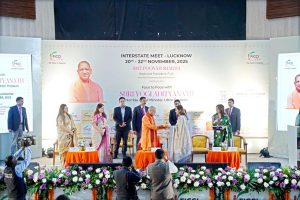
This  International Women’s Day,  we celebrate the spirit of giving back to society and making a difference.  FICCI- FLO Lucknow, a women-led forum has  brought together women from different walks of life including entrepreneurs, professionals, and grassroots changemakers under one roof, united by a common belief: when a woman rises, she lifts many others with her. Since its inception in 2015, FICCI FLO Lucknow has quietly built a reputation as more than just a networking forum. For aspiring entrepreneurs, it has become a launchpad, offering mentorship, skill-building workshops, market linkages, and access to seasoned industry leaders who guide them through the complexities of scaling a business. Young women entrepreneurs often speak about how a single introduction at a FLO event turned into funding support, collaborations, or invaluable business advice. But the impact does not stop at boardrooms and start-ups. The chapter has consistently reached out to women from low-income communities organising vocational training programmes, financial literacy sessions, digital awareness workshops, and self-employment initiatives. Whether it is helping women learn tailoring and handicraft skills, introducing them to e-commerce platforms, or connecting them with micro-financing opportunities, the focus remains clear: economic independence is the first step towards dignity. Says Vandita Agarwal, Founder Member and Chairperson, FICCI-FLO Lucknow, “FICCI FLO stands out for its ability to create a powerful platform where women entrepreneurs connect, collaborate, and grow together. By fostering meaningful networks, it enables women to access the right resources to strengthen their financial acumen, enhance digital literacy, and sharpen essential business skills. With 18 to19 focused verticals including startups, MSMEs, rural livelihoods, and skilling,  the organization offers structured pathways for learning, mentorship, and enterprise development.”. And as women engage with peers who have built successful business models, they begin to challenge traditional norms and reimagine their own potential. Inspired by real life examples of leadership and enterprise, they gain the confidence to scale their ventures and aspire to even greater impact. The theme this year for International Women’s Day in 2026 being- “Rights. Justice. Action for All Women and Girls’ small wonder that FICCI-FLO Lucknow is scripting a modern narrative based on that. The women who are part of it reflect a commitment,  where empowerment is practical, inclusive, and deeply rooted in community upliftment. Every woman, regardless of her background, has the chance not just to participate in society but to lead it.  Truly inspirational Flo-Ladies!

Read More »
Story

Spotlight on Ramzan Through an Influencer’s Mom’s Lens

For 45-year-old lifestyle influencer Tarannum Hasan Naqvi, Ramzan isn’t just a month on the calendar, it’s a feeling that quietly settles into her home in Lucknow, bringing faith and family closer than ever. “Our day begins with Sehri together,” she says with a smile. “No matter how sleepy my kids are or how early the alarm rings, we make it a point to sit around the table as a family. There’s something special about starting the fast with prayer and shared laughter in those quiet pre-dawn moments.” As the day unfolds, the kitchen slowly becomes the heart of the home. Afternoons are spent preparing for Iftar, often with her children by her side, as she feels traditions must be carried on by the next generations, too. “I ask them to help set the table or arrange the dates,” she shares. “It may seem like a small thing, but it teaches them gratitude. They begin to understand that Ramzan is not just about food — it’s about patience, kindness, and being thankful for what we have.” Iftar at her home is simple yet soulful,  a comforting mix of traditional favourites and a few new-age recipes she enjoys experimenting with. “It’s never about putting out a lavish spread,” she says thoughtfully. “It’s about that beautiful moment when we all sit together and break our fast. That first sip of water, that first bite it all reminds you how blessed you are.” One tradition she holds especially close to her heart is hosting loved ones for Iftar. “We make it a point to host at least one family Iftar every year,” she says. “The house feels fuller, louder, warmer. Ramzan is about strengthening bonds, and sharing a meal does exactly that.” For Tarannum, the holy month goes far beyond abstaining from food. “Ramzan makes you pause,” she reflects. “It gives you the chance to slow down, to look inward, to reconnect not just with your faith, but with the people who matter most.” And in those quiet moments between Sehri and Iftar, that’s where the true essence of Ramzan lives for her in togetherness, gratitude, and love.

Read More »
Story

Uttar Pradesh’s Spiritual Corridors Redefine Pilgrimage

In recent years, the Uttar Pradesh government has set out to reimagine some of India’s most sacred spaces through the development of expansive religious corridors. These projects are designed not only to beautify temple surroundings but also to make pilgrimage safer, smoother, and more accessible for millions of devotees. Faith has always been the heartbeat of Uttar Pradesh,  and now, that faith is finding new pathways. As pilgrim footfall rises across the state, devotees travelling to sacred cities will experience not only spiritual solace but also thoughtfully upgraded infrastructure designed to make their journeys easier, safer and more comfortable. In the wake of the 2025 Mahakumbh, five major spiritual corridors have been developed with Prayagraj at the centre, connecting revered destinations like Varanasi, Ayodhya, Chitrakoot, Naimisharanya and Mathura. Wider roads, smoother expressways, better crowd management and improved pilgrim amenities are quietly transforming the way people undertake these sacred journeys. This initiative is more than a facelift for temple towns. It reflects a larger vision — one that blends devotion with development. By restoring heritage spots and adding modern facilities such as guesthouses and visitor services, the state is ensuring that centuries-old traditions continue in spaces that feel welcoming and well cared for Religious tourism has also become a powerful double engine for local economies, particularly in Ayodhya, where visitor numbers have surged.  Supporting this push, the Uttar Pradesh Budget 2025–26 has earmarked ₹400 crore for religious tourism and infrastructure, including ₹150 crore for the Banke Bihari corridor in Mathura–Vrindavan. Alongside this, a broader ₹4,560 crore connectivity plan aims to strengthen roads linking major pilgrimage sites,  reinforcing Uttar Pradesh’s aspiration to emerge as a global spiritual destination. Key Religious Corridors being Developed in Uttar Pradesh: Prayagraj-Vindhyachal-Kashi Corridor: Connects the Vindyavasini Temple in Mirzapur to Kashi Vishwanath in Varanasi. Prayagraj-Ayodhya-Gorakhpur Corridor: Connects Triveni Sangam, Ramjanambhoomi and Gorakhnath Math Prayagraj-Lucknow-Naimisharanya Corridor: Connects to Naimisharanya Dham in Sitapur. Prayagraj- Rajapur-Chitakoot Corridor: Connects to the birthplace of Tulsidas and some spots of Lord Ram’s exile. Prayagraj- Mathura-Vrindavan-Shukh Teerth Corridor: Connects to birthplace of Lord Krishna. Kashi Vishwanath Corridor: Connecting Ganga Laitha Ghat to Kashiwishwanath Temple  Buddhist Circuit: Connects some spots of Sarnath with Kushinagar

Read More »
Story

Our Spouse is our Soul Mirror

By: Divya Malik In the sacred journey of partnership, especially between husband and wife, the bond is never just emotional,it is karmic, energetic, and profoundly psychological. Two souls do not meet by chance. They are drawn to each other by resonance, by unfinished lessons, and by the deeper healing their union has the power to activate. From a spiritual perspective, our spouse is often the soul mirror we resisted the most.From a psychological perspective, they become the trigger that brings our subconscious wounds into the light. And this is why marriage can feel intense, confusing, or emotionally charged not because the relationship is wrong, but because the inner child, the shadow self, and the unhealed emotional body finally feel safe enough to surface.Whatever we dislike or resist in our partner is rarely about them.It is the echo of an unprocessed memory… an unmet need… an unacknowledged fear.Our spouse becomes the reflector of the parts within us that we have not yet honored.When their words or actions stir something painful in us, it is the psyche whispering: “This wound is ready.”“This part of you needs presence.”“This emotion is your teacher. Spiritually, this is karma revealing itself not as punishment, but as an opportunity to dissolve old patterns carried through lifetimes. Psychologically, this is projection where our mind places unresolved inner material onto the person standing closest to us.Marriage becomes the divine intersection of both worlds:karma meeting psychology, soul meeting subconscious. Until we pause and genuinely introspect:• Why did this trigger me?• Which old wound is being reopened?• Where in my history does this emotion belong?• Is this truly about my partner, or is it a reflection of my own unhealed story?…we continue reliving the same cycles, not because our spouse fails us, but because our inner work remains unfinished.Every conflict is a doorway.Every irritation is a guidepost.Every emotional reaction is an unhealed part of the self asking to be integrated.Spiritually, this is how the universe gently pushes us toward awakening.Psychologically, this is how the shadow asks to be seen.Your partner is not here to break you they are here to reveal you.When you embrace this, marriage transforms from a battlefield into a healing temple.Triggers become teachers.Pain becomes purification.And the connection evolves into a sanctuary where both souls rise.This is the deeper purpose of sacred partnership not perfection, but consciousness… not agreement, but evolution… not comfort, but healing into wholeness.

Read More »
Story

Women Power:Celebrating, Strength, Sisterhood, and Social Impact

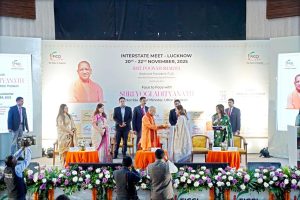
This  International Women’s Day,  we celebrate the spirit of giving back to society and making a difference.  FICCI- FLO Lucknow, a women-led forum has  brought together women from different walks of life including entrepreneurs, professionals, and grassroots changemakers under one roof, united by a common belief: when a woman rises, she lifts many others with her. Since its inception in 2015, FICCI FLO Lucknow has quietly built a reputation as more than just a networking forum. For aspiring entrepreneurs, it has become a launchpad, offering mentorship, skill-building workshops, market linkages, and access to seasoned industry leaders who guide them through the complexities of scaling a business. Young women entrepreneurs often speak about how a single introduction at a FLO event turned into funding support, collaborations, or invaluable business advice. But the impact does not stop at boardrooms and start-ups. The chapter has consistently reached out to women from low-income communities organising vocational training programmes, financial literacy sessions, digital awareness workshops, and self-employment initiatives. Whether it is helping women learn tailoring and handicraft skills, introducing them to e-commerce platforms, or connecting them with micro-financing opportunities, the focus remains clear: economic independence is the first step towards dignity. Says Vandita Agarwal, Founder Member and Chairperson, FICCI-FLO Lucknow, “FICCI FLO stands out for its ability to create a powerful platform where women entrepreneurs connect, collaborate, and grow together. By fostering meaningful networks, it enables women to access the right resources to strengthen their financial acumen, enhance digital literacy, and sharpen essential business skills. With 18 to19 focused verticals including startups, MSMEs, rural livelihoods, and skilling,  the organization offers structured pathways for learning, mentorship, and enterprise development.”. And as women engage with peers who have built successful business models, they begin to challenge traditional norms and reimagine their own potential. Inspired by real life examples of leadership and enterprise, they gain the confidence to scale their ventures and aspire to even greater impact. The theme this year for International Women’s Day in 2026 being- “Rights. Justice. Action for All Women and Girls’ small wonder that FICCI-FLO Lucknow is scripting a modern narrative based on that. The women who are part of it reflect a commitment,  where empowerment is practical, inclusive, and deeply rooted in community upliftment. Every woman, regardless of her background, has the chance not just to participate in society but to lead it.  Truly inspirational Flo-Ladies!
Read More »
Story

Holi Baarat: The Living Legacy of Lucknow’s Royal Holi Processions

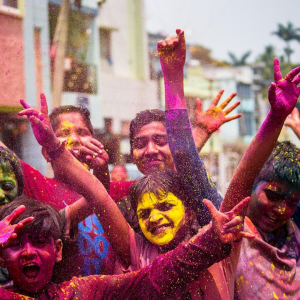
The festival of Holi has held a s special meaning for Lucknow and the erstwhile region of Awadh. Seeped in tradition, the festival of colours has been raising a riot of colour for centuries. Lucknow has been home to a centuries-old tradition that has slipped into oblivion over time. This week, we trace the path of the city’s iconic Holi Baraat, exploring how a royal Nawabi pastime that bore testimony to a symbol of communal harmony and still remains the beating heart of our cultural identity during the festival of colours. Read on.  It’s been an important part of Lucknow’s cultural identity, unmissable during the festival of colours. This quaint tradition is that of the Holi processions, known locally as the Holi Barat.   A vibrant testament to the city’s Ganga-Jamuni Tehzeeb, the processions gained popularity during the reign of Nawab Asaf-ud-Daula, who is credited with turning the local festival into a melting pot of celebration where the distinction between the ruler and the ruled dissolved under layers of abeer and gulal. The tradition is very much alive even today and is organised during Holi by members of the Kshatriya Mahasabha and the Chowk Holi Baraat Committee. Every year, both committees organise a massive carnival of colours that winds through the cobbled lanes of Old Lucknow. Explains a member of Chowk Holi Barat Committee, “The Holi Baraat  starts from the Siddhanath Temple in Chowk, and traverses through Akbari Gate, Victoria Street, and Nakhas.”  People keep joining the sepertine procession, playing traditional folks songs, following horse-drawn carriages and open trucks full of people dressed as mythological characters from the pages of history. A true representation of the uniquely “Lakhnawi Ganga Jamuni Tehzeeb”  the procession has participation of all communities. It is a common sight to see members of the Muslim community waiting at the Akbari Gate, welcoming the Hindu procession with flower petals and ittar (perfume). Never mind that while Holi celebrations in urban sections of  Lucknow have shifted toward private club parties and rain dances, the Chowk ki Holi remains the city’s cultural anchor even now bearing testimony to the fact that the spirit of the Nawabs survives in the heart of the old city. Where to Catch a Glimpse of the Holi Baraat on March 2nd 2026: 10:00 AM: Starts from Koneswar Temple  11.30 AM: Reaches Siddanath Temple  Lane 12.30 PM: Reaches Akbari Gate and is welcomed by members of the Muslim Community with ittar and rose petals.

Read More »
Story

Holy Ramadan Begins with Sighting of the Sacred  Moon

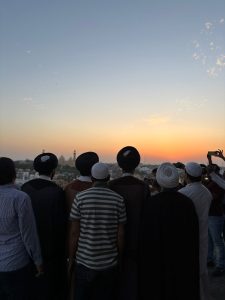
The sighting of the crescent moon marked the beginning of the holy month of Ramzan this February. The families in city preparing for the long days of fasting  gathered over roof tops, terraces, and open spaces, eagerly looking toward the horizon and gardens to gaze at silver crescent lunar spectacle.  The sighting of the moon is a moment wrapped in faith, togetherness, and quiet emotion. There is a certain stillness in the air, yet a gentle excitement lingers as hearts prepare for the days of discipline and fasting ahead. Families and communities gathered together, eyes lifted to the sky, waiting patiently for that first delicate glimpse of the crescent that marks the beginning of the holy month. In that shared pause, hope, devotion, and anticipation blend beautifully, turning a simple sight into a deeply meaningful experience. Once the moon is finally sighted, the news travels quickly — mosques make their announcements, and warm greetings of “Ramzan Mubarak” begin to echo everywhere. With this confirmation, a sacred journey quietly begins in the city, one that revolves around fasting from dawn to sunset, offering more prayers, giving charity, and turning inward for self-reflection. The special night prayers, Taraweeh, gather worshippers in a shared space of devotion, deepening the sense of unity and belonging within the community. At home, a gentle rhythm of preparation takes over. Kitchens prepare for sehri before sunrise and iftar at sunset, while hearts slowly shift towards patience, gratitude, and spiritual growth. The sighting of the moon is not just a ritual; it is an emotional and spiritual turning point — a soft yet powerful reminder that a month of mercy, forgiveness, and renewed faith has begun.

Read More »
Story

Vastu Tips for February

Vastu Tips for February Simple shifts for balance, well-being and everyday harmony As we settle into February, it’s a good time to make a few mindful changes at home or work. Small adjustments in placement can subtly refresh the energy around you and bring a sense of flow and stability. Bamboo Plant – South EastTry placing a healthy bamboo plant in the South-East corner of your space. This direction is associated with growth and abundance. A bamboo here is believed to invite prosperity, support financial stability, and encourage steady progress — whether in your career or personal goals. It also adds a touch of natural calm to the environment. Metal Wall Clock – West / North-WestIf things have been feeling delayed or stuck, consider hanging a metal wall clock in the West or North-West direction. This placement is said to help clear stagnation and get energy moving again. It symbolically supports better time management, discipline, and smoother progress in day-to-day matters. Water Body or Fountain – NorthThe North direction is linked with career and opportunities. A small water feature or fountain placed here is considered auspicious, as flowing water represents movement and income. It’s believed to attract fresh opportunities, financial stability, and clearer decision-making. Lord Dhanvantari – North EastThe North-East is regarded as a spiritually powerful zone. Placing a photo or idol of Lord Dhanvantari here is believed to strengthen healing energy within the space. This placement is associated with better health, emotional balance, mental clarity, and an overall sense of calm for everyone in the home. Even small, thoughtful changes can shift the way a space feels. February is the perfect time to realign your surroundings and invite a little more harmony into everyday life.

Read More »
Food & Dining

Jain Chaat Bhandar: Zero Onion Full Wow!

Jain Chaat Bhandar is an iconic vegetarian chaat spot in Lalbagh, Lucknow known for its timeless street- food flavours and crowd-pulling evening vibe. The shop was begun around the mid- 1980s when Santosh Kumar Jain moved from Tikait Nagar (Barabanki) to set up a small chaat stall near the main Lalbagh crossroads — the exact date isn’t documented publicly, but local food history credits its start to roughly 35 years ago His idea was simple: prove that great chaat could be made without onions, garlic, or ginger to respect Jain dietary rules, and still be crave-worthy. Today it’s run by his sons Sanjeev Jain and Raju Jain, who’ve kept dad’s flavour philosophy alive while serving new generations of chaat lovers. The menu here is classic North Indian chaat, served with zest and flair: plate-fulls of papdi chaat, aloo tikki chaat, matar chaat, dahi badas,gol gappe (pani puri ) and other tangy favourites. Everything strikes that perfect balance of sweet chutney, zesty spices, and crisp textures, making evenings in Lalbagh a delightfully messy, delicious affair. The vibe is unpretentious and friendly, with regulars gathering from about 5 PM to 9 PM to grab their favourite chaat after work or while exploring the city’s street- food scene.

Read More »
Story

Powering UP with Solar Energy

UP is quietly scripting a solar success story, turning rooftops and open lands into power hubs.With over 3.57 lakh roof top systems and 1,227 MW capacity, the State now ranks among India’s top solar producers.Schemes like PM Surya Ghar Muft Bijli Yojana have made clean energy affordable, backed by ₹3,000+ crore in subsidies. Under CM Yogi Adityanath, solar energy has become a symbol of progress, jobs, and a greener future. As India races toward a cleaner and more sustainable future, solar energy has moved from being an option to a necessity. In this transition, Uttar Pradesh—once seen as an energy-hungry state—has begun to rewrite its power story. Under the leadership of Chief Minister Yogi Adityanath, solar energy has emerged as a key driver of change, blending technology, policy, and public participation. From rooftops in small towns to large solar parks in sun-rich regions, the state is quietly building a renewable energy revolution—one panel at a time. In recent years, Uttar Pradesh has made remarkable progress in solar energy. The state has installed around 3.57 lakh rooftop solar systems, achieving a total solar capacity of about 1,227 megawatts (MW). This has placed Uttar Pradesh among the top three solar-energy- producing states in India. Rooftop solar systems have helped households reduce electricity bills by 60–90 percent, making clean energy both affordable and practical. A major boost came from the Pradhan Mantri Surya Ghar Muft Bijli Yojana, under which Uttar Pradesh received over 10.94 lakh applications. To support this massive response, the central government provided ₹2,440 crore in subsidies, while the state government added nearly ₹600 crore, ensuring wider access to solar installations for middle- and lower-income families. The government has also promoted solar energy in public infrastructure. Schools, hospitals, government offices, and local bodies have adopted rooftop solar systems, reducing power costs and setting an example for citizens. Farmers have benefited through solar-powered irrigation pumps, cutting fuel expenses and improving energy reliability in rural areas. By simplifying policies and encouraging private investment, Yogi Adityanath’s government has also created jobs in installation, maintenance, and manufacturing. Overall, Uttar Pradesh’s solar journey reflects a clear vision—clean energy, economic growth, and a sustainable future working together.

Read More »
Story

Bhajan Clubbing Lands in Lucknow!

Lucknow is officially turning up the spritual volume. Bhajan Clubbing where traditional devotional chants collide with modern beats, is taking the city by storm, and Gen Z is here for it. Forget quiet satsangs—this is bass you can feel, chants you can sing along to, and vibes you can’t resist. So what exactly is bhajan clubbing? Think traditional bhajans and kirtans infused with modern music—EDM, chillstep, soft bass, and even trance-like drops. It’s a space where people chant together, sway, clap, and vibe to devotional lyrics without the confines of a temple. It’s meditation and music, community and creativity, all rolled into one unforgettable night. One of Lucknow’s trendsetting events was Bhakti Beats by RJ Prateek at Karwaan Studio on 31 December 2025, where chants like Shri Krishna Govind Hare Murari and and Jai Shri Ram were remixed with electronic layers, drawing young devotees who danced and meditated at the same time. The city’s largest gathering came at “Bhajan Jamming: Ekatva” at SR Group of Institutions, Bakshi ka Talab, where over 5,000 students and devotees jammed together, clapping, chanting, and soaking in he collective energy. From cafés to open lawns, Lucknow is buzzing with nights where phones are down, reels are rolling, and traditional bhajans meet bass-driven beats, creating a vibe that’s uniquely Lucknowi. From Karwaan Studio to SR Group of Institutions, it is clear: bhajans aren’t fading—they’re being reimagined by the city’s youth, turning spiritual nights into immersive, unforgettable experiences. Bhajan clubbing, which blends traditional devotional music with modern beats, was popularised by young artists like Prachi and Raghav Agarwal of the band Backstage Siblings, whose energetic baithak” performances of chants like Shri Krishna Govind Hare Murari gave the trend its initial Gen Z push. Other groups, such as the devotional rock band Keshavam, have further modernised bhajans with amplified, contemporary arrangements. While Lucknow has become a hotspot with events like Bhakti Beats and Bhajan Jamming: Ekatva, the phenomenon has spread to other major Indian cities. Delhi and Ahmedabad now host youth-oriented bhajan nights in cafes and cultural spaces, Mumbai sees regular “bhajan jamming” sessions near temples, and Bengaluru, Kolkata, and Chennai have emerging communities blending collective chanting with electronic or acoustic beats. Organisers focus on creating sober, and trance-like experiences, appealing to young audiences who want spiritual connection without the constraints of traditional temple settings or nightclub culture. This cross-country spread shows bhajan clubbing has evolved from a niche experiment into a full-fledged cultural movement among India’s youth.

Read More »
Story

Lucknow’s AI Awakening!

Lucknow is quietly rewriting its identity—and this time, it’s not just about Kebabs, Chikankari, or Nawabi Tehzeeb. The city of grace is stepping into the future with a bold new title in sight: India’s first AI City—and there is actual data and plans behind the dream.At the heart of this transformation is a massive ₹10,732 crore investment earmarked to build out Lucknow’s AI infrastructure, including over 10,000 high-performance GPUs, multi-modal language models, and a dedicated AI innovation centre, setting it apart from other tech hubs in the country. This investment is reported to be 67 %higher than any other technology infrastructure project in India, positioning Lucknow as a serious national AI hub.The blueprint spans 20+ acres of Phase-I development within a larger ~258 acre AI City zone in the Vrindavan Yojana IT City area. Plans include tech parks, research labs, incubation centres, flexible AI workspaces, and integrated residential and commercial zones to support a true work-live ecosystem.But it’s not just hardware and buildings. The AI Pragya initiative aims to train over 10 lakh people—from students and teachers to government workers and farmers—in AI, machine learning, data analytics, and cybersecurity, in partnership with global tech players like Microsoft, Google, Intel, and Guvi. Imagine a workforce not just using AI, but building it.This isn’t futuristic buzz alone. AI systems are already getting integrated into governance, from advanced traffic management proposals to AI-enhanced surveillance and smart public services. And with institutions like IIT Lucknow and IIM Lucknow feeding the talent pipeline, the city’s academic backbone is strong.If all goes as planned, the city of nawabs may soon be known as the city of neural networks too—and honestly, it suits Lucknow. And maybe that’s the most futuristic part of it all.

Read More »

Registered Office

2nd floor, Rohit House, Shah Najaf Road,
Lucknow-226001

Email Us: enquiries@indietimescoverage.news

Contact: +91 522 4343939  |   +91 94735 01234

RNI No: UPENG/25/A3578

Copyright @ 2026 indie times coverage. All Rights Reserved.

Powered by Bito Technologies