

Category: Business

Where Retro Meets the Future: Shoma Banerjee’s Mission for Music 

 For Indian Idol winner and well known Bollywood  singer Shoma Banerjee, music is not just performance but a responsibility toward preserving India’s rich musical heritage. Through her tribute concerts, retro concepts, and reinterpretation of timeless classics, she continues to keep traditional and melody-driven music alive for newer generations. In conversation with Editor Indie Times she speaks of her passion to create a platform for musicians to thrive. Q.Your music beautifully revives the timeless melodies of legendary singers and composers. What inspired you to take this journey of reconnecting audiences with the golden era of music? Ans.I started my career singing film songs, but later took a long break to focus on Indian classical music, ghazals, and original compositions. For nearly 20 years, I was deeply involved in creating original music. Growing up in Bhilai, where audiences greatly value authenticity and melody, I was naturally drawn toward meaningful music. As a youngster, I grew up listening to legends like Lata Mangeshkar, Asha Bhosle, Kishore Kumar, and Mukesh. Their songs stayed with me. After coming to Mumbai following Sa Re Ga Ma in 1995, I returned to singing Bollywood music and realized there was a huge audience for retro songs. Q. You did many live performances and were regularly singing at concerts and Mahotsavas in Lucknow too? Ans. Alongside live performances, I also sang for films, songs like “Theme Song of Taal,” “Chhalka Chhalka,” tracks from Saathiya, a Marathi song that won me the Best Singer award, and more recently “Abhi Na Jao Chhod Ke” featuring Shabana Azmi in Rocky Aur Rani Kii Prem Kahaani. Many of my songs may not have received massive commercial mileage, but they remain close to my heart.  I feel more comfortable with retro music and wanted to create something different by keeping timeless melodies alive. That led me to launch concepts like Singing Divas of Bollywood from Kanan Devi to Lata Mangeshkar,  along with tributes to Geeta Dutt and K. L. Saigal. What gives me the greatest joy is seeing the happiness on the faces of senior listeners and, at the same time, the curiosity Gen Z shows toward old music. They connect deeply with these songs because the melody is timeless, no generation can ignore it. Q. In today’s fast-changing music industry, how important do you think it is to preserve and reinterpret the works of yesteryear stalwarts for younger audiences? Ans. We must preserve our old music because the richness and depth it carries are rare to find today. The beautiful orchestration, the use of original live instruments, and the way songs were composed to suit every emotion and situation offer timeless lessons in music-making. There is a reason we call it the golden era of music,  it gave us extraordinary composers, lyricists, and singers whose work continues to inspire generations. Old music is not just entertainment; it is a valuable archive of creativity and emotion.For future generations, these songs will remain a reference point for understanding how music can express feelings with authenticity and grace. Preserving old music means preserving our cultural and artistic heritage. Q. While paying tribute to iconic music legends, how do you balance originality with nostalgia in your performances and creations? Ans.  At the same time, when we revisit old songs with fresh orchestration, they become more relatable to the younger generation. Just as fashion changes with time, sounds, voices, and musical textures also evolve. That is why every era creates its own music and style. A lot of experimentation and innovation is happening in today’s music scene, and that evolution is important. However, while performing tributes to legendary songs, I usually avoid changing the original composition or style too much, because my intention is to showcase the beauty of the original creation. But when I interpret a song in my own way, I present it as an unplugged or gayaki-style rendition. Even then, I try to retain the soul and essence of the original while adding my personal touch and emotional expression. Q. You have also been encouraging and mentoring young artists. What kind of talent or passion do you look for in the new generation of singers and musicians? Because of music apps, singing film songs has become much easier today. Many people sing for personal satisfaction and already have their own small audiences through these platforms. It has created a completely different musical world. The real concern, however, is the younger generation. Since music no longer guarantees financial stability, many talented youngsters hesitate to pursue it professionally. Fine music is gradually being ignored, and only a handful are willing to dedicate themselves fully to the art. In today’s fast-paced world, people often forget that it takes years of discipline and hard work to sing even one line perfectly. Young artists are frequently judged by quick success rather than true talent. Q. What is your larger vision for creating a platform where the legacy of legendary music and the creativity of emerging artists can grow together? Ans. The younger generation is eager for good music, but they are not getting the variety we experienced in our time. They connect strongly with anything that is presented in a fresh and contemporary way. Songs like “Rangi Saari” became popular again because of their modern presentation, and even traditional compositions are finding new audiences among youngsters. To connect with today’s listeners, experimentation is essential. However, because music is now so easily available and constantly overexposed, songs tend to become stale very quickly. My vision is to create a platform where along with music,the young singers can earn money. Without financial stability, it is difficult to sustain long-term interest in music. Reality shows do provide instant fame and visibility, but many young artists are pushed into struggles they are unprepared for. They often lack proper training, grooming, and guidance to handle the industry. Sadly, I see many such stories around me today.
Read more

Lucknow Pays Tribute to Prateek Yadav as Leaders Across Political Lines Attend Shanti Bhoj 

Lucknow came together in quiet grief as a Shanti Bhoj was held in memory of Prateek Yadav. The gathering, hosted at Akhilesh Yadav’s residence, saw family members, old friends, political leaders and well-wishers arriving not as rivals or public figures, but simply as people offering support to a grieving family. Akhilesh Yadav, Shivpal Singh Yadav, Dimple Yadav and Prateek’s wife Aparna Yadav personally received guests through the day. There was a sense of solemn silence in the atmosphere, less about politics and more about shared loss. Despite staying away from active politics, Prateek seemed to have built strong personal bonds across different circles, something visible in the number of people who came to pay their respects. Chief Minister Yogi Adityanath, Deputy Chief Ministers Brajesh Pathak and Keshav Prasad Maurya were among those present, along with leaders from the Samajwadi Party and BJP, ministers, MPs and senior officials. For a few hours, political differences appeared to fade into the background. People remembered Prateek as someone deeply passionate about fitness, animals and family life. Conversations were soft, prayers were offered quietly, and the gathering reflected the kind of affection and goodwill he left behind in Lucknow.
Read more

Ghosts of the Qila: Is Lucknow Hiding a Forgotten Underground World?

 Beneath the grandeur of Lucknow’s historic skyline, whispers of a forgotten underground world continue to surface, especially around the British Residency, where wartime cellars and sealed passages from 1857 still fuel talk of hidden escape routes. Whispers of escape routes, sealed chambers, and a buried chapter of history grip the old city once again. Indie Times explores the lore  The historic city of Lucknow is once again at the centre of intrigue as talk of “hidden underground tunnels” beneath its heritage zones has resurfaced, sparking curiosity among residents, historians, and heritage enthusiasts. Much of the speculation is focused around the iconic British Residency, Lucknow, a key site from the 1857 uprising. Built during the British era, the complex is known to contain underground cellars, storage rooms, and restricted passages that were used during the long siege. These structures were primarily designed for military movement, shelter during bombardment, and ammunition storage. However, over the decades, local oral histories have transformed these functional spaces into something more mysterious, stories of long escape tunnels allegedly connecting the Residency to distant points such as the Gomti riverbank and other colonial-era buildings. Adding to the intrigue are the remnants of underground architecture linked to the Nawabs of Awadh, particularly within complexes like the grand Bara Imambara. These structures include stepwells, vaulted chambers, and service corridors that were designed for climate control, storage, and palace operations. Over time, some of these have been loosely described in popular imagination as “secret tunnels.” Heritage experts, however, caution against sensational interpretations. While acknowledging the presence of underground chambers and sealed structures in old Lucknow, they say there is no verified evidence of a continuous tunnel network spanning the city. Most features documented so far are isolated architectural elements rather than interconnected passage systems. Despite this, curiosity continues to grow, fuelled by periodic maintenance work in old neighbourhoods and the city’s layered history of Mughal, Nawabi, and British-era construction. For many locals, the question remains irresistible: beneath Lucknow’s elegant streets and monuments, is there still more waiting to be uncovered,  or is the mystery itself the real legacy? What is NOT confirmed Why the story still exists
Read more

Chaos, Selfies & Screams: Varun and Mrunal Set Phoenix Palassio on Fire!

Lucknow witnessed full-blown Bollywood madness when heartthrob Varun Dhawan and the stunning Mrunal Thakur arrived at Phoenix Palassio  to promote their upcoming rom-com, Hai Jawani Toh Ishq Hona Hai. By afternoon, the luxury mall had transformed into a sea of screaming fans, flashing phone cameras, and pure adrenaline. Every balcony, railing, and corner of the atrium was packed as chants of “Varun! Varun!” echoed through the massive European-style interiors. The excitement was impossible to contain. And when the duo finally made their grand entry? Absolute pandemonium. Dressed in effortless glam, Mrunal charmed the crowd with her warmth while Varun, in his trademark high-energy style, sent fans into a frenzy as the pair danced to their latest track Wow. For a few magical moments, Phoenix Palassio felt less like a mall and more like a full-scale Bollywood concert. But the fan frenzy soon spiraled beyond control. With thousands pushing forward for selfies and a closer glimpse, police officials had to intervene and escort the stars out within minutes due to safety concerns. The sudden exit left many fans emotional, disappointed, and even in tears. One young fan’s emotional post about waiting five hours for just a five-minute appearance later caught Varun’s attention online. Winning hearts all over again, the actor personally apologized and promised Lucknow a bigger and better fan event soon.
Read more

Under the Glow of Thousand Candles, Lucknow Fell in Love With Music Again 

Lucknow witnessed an enchanting evening of music, nostalgia and soulful melodies as Clarks Avadh hosted a mesmerizing Candlelight Mehfil-e-Sufi” followed by a tribute to playback sensation Arijit Singh. The iconic venue, known for its regal Nawabi charm, was transformed into a glowing wonderland illuminated by thousands of candles, setting the tone for an unforgettable musical experience. Truly ethereal,  the evening opened with a soulful Sufi mehfil that instantly transported guests into a world of spirituality and serenity. Accompanied by the soothing sounds of the tabla, violin and keyboard, the musicians performed timeless Sufi compositions that resonated deeply with the audience. The candlelit ambience added to the magic, creating an intimate setting where every note felt personal and immersive. As the night progressed, the mood shifted from spiritual to sentimental with a heartfelt instrumental tribute to Arijit Singh,  the voice that defines romance for an entire generation. Melodic renditions of chartbusters like Tum Hi Ho, Ae Dil Hai Mushkil, Agar Tum Saath Ho and Kesariya had the audience swaying and softly humming along. Without heavy studio arrangements, the stripped-down instrumental versions highlighted the raw emotion and depth of the songs, leaving many visibly moved. City music lovers, socialites and young couples turned up in elegant evening wear, making it one of the most talked-about cultural evenings in Lucknow this season. Guests were seen capturing the dreamy candlelit décor and musical moments on their phones while soaking in the magical atmosphere. Blending timeless Sufi traditions with contemporary Bollywood romance, the evening proved that music needs no grandeur to leave an impact. Sometimes, all it takes is candlelight, melody and emotion to create pure magic. Kudos to the organisers!
Read more

Bada Mangal 2026: Lucknow Witnesses a Rare Confluence of Faith and Service

Lucknow is immersed in an atmosphere of devotion and celebration as the city observes Bada Mangal, one of its most cherished spiritual traditions and a living symbol of its famed Ganga-Jamuni Tehzeeb. This year’s celebrations hold extraordinary significance, as 2026 marks a rare celestial alignment created by the Adhik Maas (intercalary month), resulting in an exceptional cycle of eight Bada Mangals, a phenomenon being witnessed after nearly 19 years. Across the city, from ancient temples to bustling marketplaces, the spirit of faith, charity, and togetherness has transformed ordinary Tuesdays into grand community festivals. Traditionally observed during the Hindu month of Jyeshtha, Bada Mangal is dedicated to Lord Hanuman and is unique to Lucknow’s cultural identity. Devotees believe that worship during this sacred period brings courage, protection, and spiritual strength. According to local priest Acharya Kamal Mishra, the eight Tuesdays this year symbolize the “Ashta Siddhis”, the eight divine powers associated with Hanuman Ji. “This Maha Sanyog offers devotees an extended period for sadhana and self-reflection. Worship performed during this rare 60-day cycle is believed to yield manifold blessings and inner strength,” he explains. From dawn till late night, Hanuman temples across the city are witnessing massive crowds of devotees chanting hymns, offering prayers, and participating in elaborate aartis. The famous Aliganj Hanuman Temple has emerged as the focal point of celebrations, drawing thousands seeking blessings amid the rhythmic chants of “Jai Bajrang Bali.” Streets surrounding temples are illuminated with decorative lights and lined with stalls distributing free food, water, and refreshments. The essence of Bada Mangal, however, lies not only in worship but also in seva — selfless community service. Across Aminabad, Indira Nagar, Hazratganj, and other localities, businesses, social groups, and residents have come together to organize large-scale bhandaras and relief stalls for passersby battling the intense summer heat. Renowned establishments such as Universal Books and Chaya Book Depot have continued their decades-old tradition of serving chilled sherbet, cold water, and refreshments to thousands of students, shoppers, and commuters. The city’s culinary icons have also stepped forward to strengthen the festive spirit. Neelkanth Sweets, known for its quality and deep-rooted connection with local traditions, is distributing special prasad including its signature boondi and seasonal mango delicacies. Meanwhile, Bikanervala has established multiple food distribution counters serving Poori-Sabzi, sweets, and cooling beverages, ensuring that no devotee or passerby leaves hungry. Beyond the rituals and festivities, Bada Mangal continues to represent the soul of Lucknow,  a city where faith transcends boundaries and compassion becomes a shared celebration. From the spiritual chants echoing through temple corridors to the organized chaos of roadside feasts and volunteer-driven service camps, the festival stands as a powerful reminder of the city’s enduring culture of harmony, generosity, and collective devotion.
Read more

 A New Playground for Lucknow’s Rising Skating Talent

 With its modern design and dedicated space, the Skate Park is quickly becoming a favorite gathering spot for young enthusiasts. It not only encourages skill development but also fosters a sense of community among skaters, creating an environment where passion and discipline can thrive. The newly opened skate parks at Janeshwar Mishra Park and Lohia Park mark a significant step forward in the development of sports infrastructure in Lucknow. Known as one of Asia’s largest urban parks, both the parks have long been a hub for recreation, and the addition of a modern skating facility has further enhanced its appeal among the city’s youth. Built with a focus on safety and performance, the skate park at Janeswar Mishra features a modern track of approximately 200 meters, designed to meet the needs of both beginners and professional skaters. The facility was developed at an estimated cost of around ₹45 lakh and offers a smooth, secure surface that reduces the risk of injuries often associated with practicing on roads.  Says a skating enthusiast, “Before the construction of this dedicated space, many young skaters in Lucknow were forced to practice on streets, exposing themselves to traffic hazards and inconsistent surfaces. The new skate park has changed that reality, providing a structured and safe environment where talent can flourish,”  According to other local players, the transition from “roads to a stadium-like facility” has boosted both confidence and performance.  Moreover, the Skate Park is part of a broader vision to transform Janeshwar Mishra Park into a comprehensive sports and leisure destination. Plans for additional facilities such as cricket grounds, football fields, and fitness centers indicate a long-term commitment to promoting an active lifestyle among citizens On the other hand the new skate park at Dr. Ram Manohar Lohia Park has been designed as a modern multi-sports and recreation hub with facilities for both beginners and experienced skaters. Key features include a dedicated open-air skating rink spread across nearly 4,000 square metres, smooth concrete tracks for skateboarding, roller skating, BMX cycling, and a separate skate bowl for advanced riders. Gentle slopes and practice zones have been specially created for children and first-time learners. . The new Skate Parks are more than just a sporting facility, it symbolizes opportunity, progress, and the growing emphasis on youth development in Lucknow. By providing a safe and modern space for practice, it is paving the way for a new generation of athletes to dream bigger and aim higher. Box: Smooth concrete tracks for skateboarding, roller skating, BMX cycling, and a separate skate bowl for advanced riders.
Read more

Luxury on a Leash: The Rising Cost of Exotic Pet Care in Lucknow

 Behind the charm of rare breeds lies a world of intensive grooming, skilled handlers, and rising expenses few first-time owners anticipate. With specialised grooming services and at-home care on the rise, maintaining exotic pets is as much about investment as it is about affection. In Lucknow’s quietly evolving pet culture, companionship has taken a more unusual, and often expensive, turn. Beyond the familiar wag of Labradors and Indies, homes are opening up to Siberian Huskies, Persian Cats, Rabbits, and even Golden Turtles. These exotic companions bring joy, personality, and a certain prestige. But behind the charm lies a reality many pet parents are only beginning to fully grasp: caring for them is as demanding as it is costly. Unlike native breeds, exotic pets often struggle to adapt to Lucknow’s heat, dust, and humidity. A Siberian Husky’s thick double coat, designed for freezing climates, requires frequent de-shedding sessions, cooling treatments, and strict hygiene routines to prevent overheating. Persian Cats need meticulous daily grooming to avoid matting and skin issues. Even seemingly low-maintenance animals like rabbits and turtles demand specialized care, from delicate brushing and nail trimming to proper shell cleaning and habitat hygiene. These are not simple, DIY tasks. Many owners admit to feeling hesitant, even anxious, about handling such precise grooming needs. And mistakes can be expensive,  both in terms of veterinary bills and the animal’s well-being. That’s where professional grooming services have stepped in, reshaping pet care into a full-fledged lifestyle industry. Spaces like Happy Wags Pet Spa and Zigly Pet Grooming Clinic have become trusted names, offering more than just a wash and trim. Here, pets are eased into routines with patience, handled with familiarity, and treated with an almost spa-like indulgence. Breed-specific grooming, medicated baths, de-shedding therapies, and even aromatherapy sessions are now part of the package. But this care comes at a premium. Regular grooming for a Husky or Persian Cat can cost significantly more than that for local breeds, with monthly expenses quickly adding up. Add to that specialized diets, climate control (many owners rely on air conditioning round the clock), and periodic vet visits, and the annual cost of maintaining an exotic pet can rival that of a small luxury. To ease the stress  for both pets and their owners, door-to-door grooming services are also gaining traction. By bringing professional care into the home, these services minimize anxiety for animals unaccustomed to travel or unfamiliar environments. Convenience, however, often comes with an added fee, further highlighting how pet care is becoming an investment-heavy commitment. Despite the growth of this niche industry, a gap remains. Skilled groomers who truly understand the nuances of exotic animals are still few and far between. For many pet parents, the search isn’t just about affordability or convenience, it’s about trust. Finding someone capable of handling a sensitive, high-maintenance companion can feel like searching for a specialist caregiver rather than a service provider. In Lucknow today, pet grooming is no longer a matter of aesthetics. It has evolved into a delicate balance of care, comfort, and connection,  one that demands time, expertise, and a willingness to spend. Because for those who choose to bring home a piece of the exotic, love, it seems, comes with a very tangible price tag.
Read more

Medha Shankr on Ginny Weds Sunny 2, Love, Chaos & Owning the ‘National Crush’ Spotlight

The rising star opens up about redefining Ginny, embracing modern romance, surviving on-set chaos in Rishikesh, and staying rooted in her Noida spirit. In a no-holds-barred conversation with Indie Times, the Bollywood star gets candid about love, identity, and navigating fame. Q1. Ginny Weds Sunny 2 is being called a spiritual sequel. Since it’s not a continuation of the first story, how would you describe this new Ginny?A: It’s a completely fresh story with a new energy. Ginny in this film exists in a different world altogether. What I really love is that the film has all the right elements. There is drama, comedy, romance, and a lot of emotional depth. It explores love in a very intense yet entertaining way, showing how relationships evolve while navigating real feelings. It’s vibrant, dramatic, and full of heart. Q2. You’re playing a feisty Delhi girl again. Does this character have any similarities to the girls you grew up with in Noida?A: Honestly, Ginny is a lot like me. She’s not just one specific person. She represents girls everywhere today. She’s confident, stands up for herself, and knows her worth. Growing up in Noida, I’ve seen so many girls like her. Strong, expressive, and unapologetically themselves. That’s what makes her such a beatiful and relatable character. Q3. What was the most chaotic day on the set of GWS 2?A: There was this one day in Rishikesh when we were shooting for a song, and it suddenly started pouring heavily. Everything became unpredictable. Costumes, choreography, timing, nothing was going as planned. It was chaotic, but also kind of magical in hindsight. Those are the moments that really stay with you. Q4. Who is the most Sunny-like (annoying but lovable) person in your real life?A: I think there are quite a few. Especially young, slightly naive boys who are still figuring life out. They can be immature at times, but they have very clean hearts and a genuine willingness to learn and grow. In a way, most young guys have a bit of Sunny in them. Q5. How do you perceive the ‘National Crush’ label, does it feel like a compliment, or does it come with a sense of pressure or expectation? Ans When people call me the ‘National Crush,’ I see it as nothing but a compliment. It genuinely makes me happy and grateful. I don’t feel any pressure or limitations from it, I take it simply as love from the audience, and I embrace it wholeheartedly. Q6. What is the one Noida girl trait you will never lose?A: Definitely the foodie in me. My love for aloo Parathas and all things delicious is never going anywhere. That’s something I will always carry with me.
Read more

A Forgotten Story from Awadh’s Royal Past lives on in Lucknow’s  Architecture!

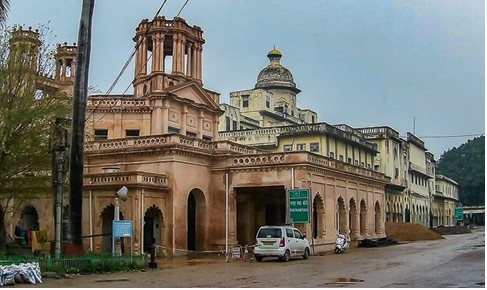
A tale of love, power, betrayal, and legacy from the era of Nawab Wajid Ali Shah still lingers in Lucknow’s memory, reflected in the city’s timeless architecture. These enduring structures stand as silent spectators to a bygone era, keeping alive the rich heritage that continues to define the city’s skyline In the rich and layered history of Wajid Ali Shah, the last Nawab of Awadh, few stories are as dramatic and lesser known as that of his beloved consort, Mashooq Begum, later honored with the title Qaisar Mahal. Mashooq Begum held a special place in the Nawab’s life. Upon the birth of a son, Wajid Ali Shah bestowed upon her the prestigious title of Qaisar Mahal. In her honor, he is said to have developed the grand complex of Qaiserbagh Palace Complex, one of Lucknow’s most iconic architectural landmarks. At the heart of Qaiserbagh stood a magnificent white pavilion known as Qasr ul Aza, surrounded by four imposing gateways. Today, only two of these gates remain, as the other two were destroyed by British forces during the upheaval of the Indian Rebellion of 1857. The Nawab’s affection for Qaisar Mahal extended beyond Qaiserbagh. A historic building originally constructed during the reign of Naseer-ud-Din Haider for his minister Roshan ud Daula, known as Roshan ud Daula Kothi, was later renamed Qaisar Pasand by Wajid Ali Shah, further reflecting his devotion. However, this royal relationship took a dramatic turn. When Wajid Ali Shah was exiled to Kolkata, he took Qaisar Mahal and their son along with him. During this period, the Nawab received a monthly allowance of one lakh rupees from the British government. It is said that Qaisar Mahal conspired with colonial authorities to secure a personal share of five thousand rupees from this stipend. When the Nawab learned of this betrayal, he was deeply hurt. In response, he divorced Qaisar Mahal and ordered the demolition of her palace. In a symbolic act of erasure, even musical instruments like the tabla and harmonium were reportedly buried within the ruins. The Nawab later justified this act by stating that he had elevated her status, but she misused the honor given to her. Historian Zulkifl Rizvi, feels this anecdote remains one of the most intriguing yet lesser discussed narratives of Awadh’s royal history. He notes that the naming of Qaiserbagh after Qaisar Mahal reflects the Nawab’s deep personal attachment, blending romance with architectural legacy. Highlighting  the symbolic significance behind the destruction of her palace and the burial of musical instruments, Rizvi shares, “For a ruler like Wajid Ali Shah, who was deeply connected to art and culture, this act was not just punitive but also a statement meant to resonate with the people of Awadh, the monuments still  standing today are  a grim reminder of that even now betrayal in love can etch the deepest wound.” The story of Qaisar Mahal continues to survive from generation to generation across Lucknow, even as physical traces of her presence have faded over time.  Despite this tragic end, Qaisar Mahal’s legacy remains etched in Lucknow’s heritage. The elegant Moti Masjid, located near Sheesh Mahal, is believed to have been commissioned by her, standing today as a quiet reminder of her once prominent place in Awadh’s royal court. Walking past its remnants, localities but imagine the lives it once held within its walls, the conversations, the elegance, the echoes of a bygone era. Today, it stands more as a memory than a monument, yet it refuses to be completely lost to time. The rise and fall of Qaisar Mahal isn’t just history, it feels personal, like a reminder of how quickly beauty and power can fade, but never truly disappear from a city like Lucknow.
Read more

Recent News

Registered Office

2nd floor, Rohit House, Shah Najaf Road,
Lucknow-226001

Email Us: enquiries@indietimescoverage.news

Contact: +91 522 4343939  |   +91 94735 01234

RNI No: UPENG/25/A3578

Copyright @ 2026 indie times coverage. All Rights Reserved.

Powered by Bito Technologies