Author: indietimescoverage

Holy Ramadan Begins with Sighting of the Sacred  Moon

The sighting of the crescent moon marked the beginning of the holy month of Ramzan this February. The families in city preparing for the long days of fasting  gathered over roof tops, terraces, and open spaces, eagerly looking toward the horizon and gardens to gaze at silver crescent lunar spectacle.  The sighting of the moon is a moment wrapped in faith, togetherness, and quiet emotion. There is a certain stillness in the air, yet a gentle excitement lingers as hearts prepare for the days of discipline and fasting ahead. Families and communities gathered together, eyes lifted to the sky, waiting patiently for that first delicate glimpse of the crescent that marks the beginning of the holy month. In that shared pause, hope, devotion, and anticipation blend beautifully, turning a simple sight into a deeply meaningful experience. Once the moon is finally sighted, the news travels quickly — mosques make their announcements, and warm greetings of “Ramzan Mubarak” begin to echo everywhere. With this confirmation, a sacred journey quietly begins in the city, one that revolves around fasting from dawn to sunset, offering more prayers, giving charity, and turning inward for self-reflection. The special night prayers, Taraweeh, gather worshippers in a shared space of devotion, deepening the sense of unity and belonging within the community. At home, a gentle rhythm of preparation takes over. Kitchens prepare for sehri before sunrise and iftar at sunset, while hearts slowly shift towards patience, gratitude, and spiritual growth. The sighting of the moon is not just a ritual; it is an emotional and spiritual turning point — a soft yet powerful reminder that a month of mercy, forgiveness, and renewed faith has begun.
Read more

Vastu Tips for February

Vastu Tips for February Simple shifts for balance, well-being and everyday harmony As we settle into February, it’s a good time to make a few mindful changes at home or work. Small adjustments in placement can subtly refresh the energy around you and bring a sense of flow and stability. Bamboo Plant – South EastTry placing a healthy bamboo plant in the South-East corner of your space. This direction is associated with growth and abundance. A bamboo here is believed to invite prosperity, support financial stability, and encourage steady progress — whether in your career or personal goals. It also adds a touch of natural calm to the environment. Metal Wall Clock – West / North-WestIf things have been feeling delayed or stuck, consider hanging a metal wall clock in the West or North-West direction. This placement is said to help clear stagnation and get energy moving again. It symbolically supports better time management, discipline, and smoother progress in day-to-day matters. Water Body or Fountain – NorthThe North direction is linked with career and opportunities. A small water feature or fountain placed here is considered auspicious, as flowing water represents movement and income. It’s believed to attract fresh opportunities, financial stability, and clearer decision-making. Lord Dhanvantari – North EastThe North-East is regarded as a spiritually powerful zone. Placing a photo or idol of Lord Dhanvantari here is believed to strengthen healing energy within the space. This placement is associated with better health, emotional balance, mental clarity, and an overall sense of calm for everyone in the home. Even small, thoughtful changes can shift the way a space feels. February is the perfect time to realign your surroundings and invite a little more harmony into everyday life.
Read more

Jain Chaat Bhandar: Zero Onion Full Wow!

Jain Chaat Bhandar is an iconic vegetarian chaat spot in Lalbagh, Lucknow known for its timeless street- food flavours and crowd-pulling evening vibe. The shop was begun around the mid- 1980s when Santosh Kumar Jain moved from Tikait Nagar (Barabanki) to set up a small chaat stall near the main Lalbagh crossroads — the exact date isn’t documented publicly, but local food history credits its start to roughly 35 years ago His idea was simple: prove that great chaat could be made without onions, garlic, or ginger to respect Jain dietary rules, and still be crave-worthy. Today it’s run by his sons Sanjeev Jain and Raju Jain, who’ve kept dad’s flavour philosophy alive while serving new generations of chaat lovers. The menu here is classic North Indian chaat, served with zest and flair: plate-fulls of papdi chaat, aloo tikki chaat, matar chaat, dahi badas,gol gappe (pani puri ) and other tangy favourites. Everything strikes that perfect balance of sweet chutney, zesty spices, and crisp textures, making evenings in Lalbagh a delightfully messy, delicious affair. The vibe is unpretentious and friendly, with regulars gathering from about 5 PM to 9 PM to grab their favourite chaat after work or while exploring the city’s street- food scene.
Read more

Powering UP with Solar Energy

UP is quietly scripting a solar success story, turning rooftops and open lands into power hubs.With over 3.57 lakh roof top systems and 1,227 MW capacity, the State now ranks among India’s top solar producers.Schemes like PM Surya Ghar Muft Bijli Yojana have made clean energy affordable, backed by ₹3,000+ crore in subsidies. Under CM Yogi Adityanath, solar energy has become a symbol of progress, jobs, and a greener future. As India races toward a cleaner and more sustainable future, solar energy has moved from being an option to a necessity. In this transition, Uttar Pradesh—once seen as an energy-hungry state—has begun to rewrite its power story. Under the leadership of Chief Minister Yogi Adityanath, solar energy has emerged as a key driver of change, blending technology, policy, and public participation. From rooftops in small towns to large solar parks in sun-rich regions, the state is quietly building a renewable energy revolution—one panel at a time. In recent years, Uttar Pradesh has made remarkable progress in solar energy. The state has installed around 3.57 lakh rooftop solar systems, achieving a total solar capacity of about 1,227 megawatts (MW). This has placed Uttar Pradesh among the top three solar-energy- producing states in India. Rooftop solar systems have helped households reduce electricity bills by 60–90 percent, making clean energy both affordable and practical. A major boost came from the Pradhan Mantri Surya Ghar Muft Bijli Yojana, under which Uttar Pradesh received over 10.94 lakh applications. To support this massive response, the central government provided ₹2,440 crore in subsidies, while the state government added nearly ₹600 crore, ensuring wider access to solar installations for middle- and lower-income families. The government has also promoted solar energy in public infrastructure. Schools, hospitals, government offices, and local bodies have adopted rooftop solar systems, reducing power costs and setting an example for citizens. Farmers have benefited through solar-powered irrigation pumps, cutting fuel expenses and improving energy reliability in rural areas. By simplifying policies and encouraging private investment, Yogi Adityanath’s government has also created jobs in installation, maintenance, and manufacturing. Overall, Uttar Pradesh’s solar journey reflects a clear vision—clean energy, economic growth, and a sustainable future working together.
Read more

Bhajan Clubbing Lands in Lucknow!

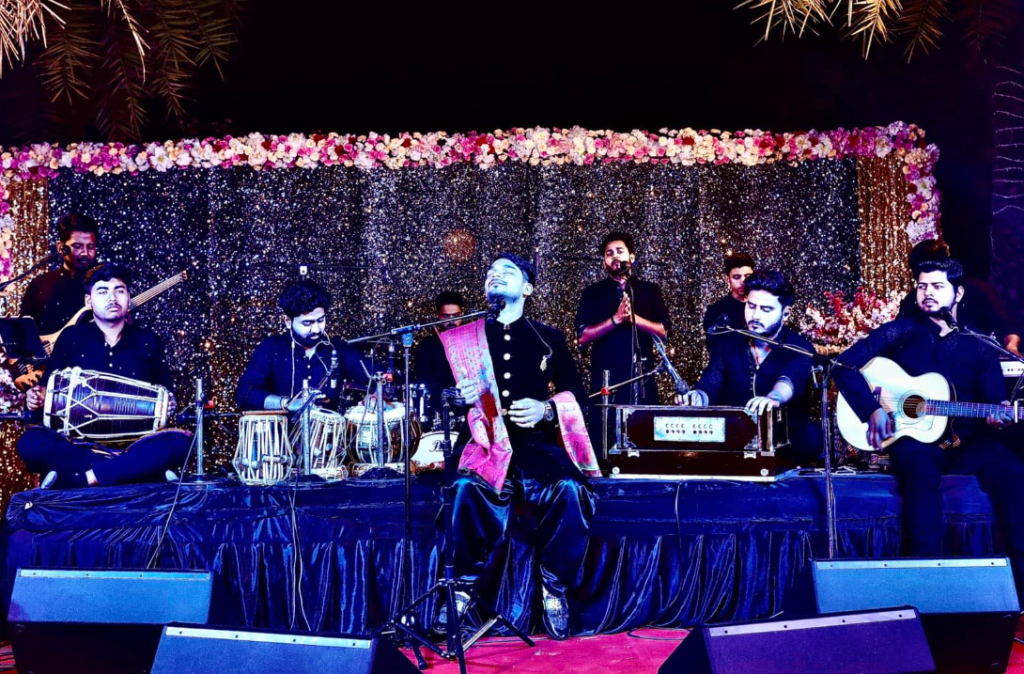
Lucknow is officially turning up the spritual volume. Bhajan Clubbing where traditional devotional chants collide with modern beats, is taking the city by storm, and Gen Z is here for it. Forget quiet satsangs—this is bass you can feel, chants you can sing along to, and vibes you can’t resist. So what exactly is bhajan clubbing? Think traditional bhajans and kirtans infused with modern music—EDM, chillstep, soft bass, and even trance-like drops. It’s a space where people chant together, sway, clap, and vibe to devotional lyrics without the confines of a temple. It’s meditation and music, community and creativity, all rolled into one unforgettable night. One of Lucknow’s trendsetting events was Bhakti Beats by RJ Prateek at Karwaan Studio on 31 December 2025, where chants like Shri Krishna Govind Hare Murari and and Jai Shri Ram were remixed with electronic layers, drawing young devotees who danced and meditated at the same time. The city’s largest gathering came at “Bhajan Jamming: Ekatva” at SR Group of Institutions, Bakshi ka Talab, where over 5,000 students and devotees jammed together, clapping, chanting, and soaking in he collective energy. From cafés to open lawns, Lucknow is buzzing with nights where phones are down, reels are rolling, and traditional bhajans meet bass-driven beats, creating a vibe that’s uniquely Lucknowi. From Karwaan Studio to SR Group of Institutions, it is clear: bhajans aren’t fading—they’re being reimagined by the city’s youth, turning spiritual nights into immersive, unforgettable experiences. Bhajan clubbing, which blends traditional devotional music with modern beats, was popularised by young artists like Prachi and Raghav Agarwal of the band Backstage Siblings, whose energetic baithak” performances of chants like Shri Krishna Govind Hare Murari gave the trend its initial Gen Z push. Other groups, such as the devotional rock band Keshavam, have further modernised bhajans with amplified, contemporary arrangements. While Lucknow has become a hotspot with events like Bhakti Beats and Bhajan Jamming: Ekatva, the phenomenon has spread to other major Indian cities. Delhi and Ahmedabad now host youth-oriented bhajan nights in cafes and cultural spaces, Mumbai sees regular “bhajan jamming” sessions near temples, and Bengaluru, Kolkata, and Chennai have emerging communities blending collective chanting with electronic or acoustic beats. Organisers focus on creating sober, and trance-like experiences, appealing to young audiences who want spiritual connection without the constraints of traditional temple settings or nightclub culture. This cross-country spread shows bhajan clubbing has evolved from a niche experiment into a full-fledged cultural movement among India’s youth.
Read more

Lucknow’s AI Awakening!

Lucknow is quietly rewriting its identity—and this time, it’s not just about Kebabs, Chikankari, or Nawabi Tehzeeb. The city of grace is stepping into the future with a bold new title in sight: India’s first AI City—and there is actual data and plans behind the dream.At the heart of this transformation is a massive ₹10,732 crore investment earmarked to build out Lucknow’s AI infrastructure, including over 10,000 high-performance GPUs, multi-modal language models, and a dedicated AI innovation centre, setting it apart from other tech hubs in the country. This investment is reported to be 67 %higher than any other technology infrastructure project in India, positioning Lucknow as a serious national AI hub.The blueprint spans 20+ acres of Phase-I development within a larger ~258 acre AI City zone in the Vrindavan Yojana IT City area. Plans include tech parks, research labs, incubation centres, flexible AI workspaces, and integrated residential and commercial zones to support a true work-live ecosystem.But it’s not just hardware and buildings. The AI Pragya initiative aims to train over 10 lakh people—from students and teachers to government workers and farmers—in AI, machine learning, data analytics, and cybersecurity, in partnership with global tech players like Microsoft, Google, Intel, and Guvi. Imagine a workforce not just using AI, but building it.This isn’t futuristic buzz alone. AI systems are already getting integrated into governance, from advanced traffic management proposals to AI-enhanced surveillance and smart public services. And with institutions like IIT Lucknow and IIM Lucknow feeding the talent pipeline, the city’s academic backbone is strong.If all goes as planned, the city of nawabs may soon be known as the city of neural networks too—and honestly, it suits Lucknow. And maybe that’s the most futuristic part of it all.
Read more

From Aashiqui To Silence

Arijit Singh has officially confirmed the news through his recent Instagram post, putting an end to all speculation. In a heartfelt message, the singer announced that he will not be taking up any new Bollywood playback singing assignments going forward. However, he made it clear that this is not a retirement from music. Arijit shared that his journey in playback singing has been beautiful and fulfilling, but he now wants to slow down, explore music on his own terms, and focus on independent projects and personal growth. He also mentioned that he will honour all existing commitments, which means fans may still hear his voice in upcoming film releases recorded earlier.Over the years, Arijit has often spoken about creative fatigue, the pressure of expectations, and his desire for a quieter life away from the constant hustle of the film industry. His growing absence from award shows, Bollywood events, and social gatherings had already hinted at this shift. So while Bollywood may no longer hear his voice as frequently, Arijit Singh isn’t disappearing he’s simply choosing a more mindful, independent musical path, proving once again that for him, art has always mattered more than applause.Arijit Singh’s decision to step away from Bollywood playback singing triggered an emotional wave across the music industry, with some of the biggest names reacting publicly on social media. Rapper and singer Badshah summed up the collective sentiment by calling Arijit “sadiyon mein ek” (one in a century), highlighting the rare impact he has had on Indian music. From the bylanes of Murshidabad, West Bengal, to ruling every heartbreak playlist in the country, Arijit Singh’s rise feels nothing short of cinematic. By the age of three, Arijit was training in tabla and Indian classical music.Fame Gurukul in 2005 marked his first brush with the spotlight, where he emerged as one of the top six finalists. Bollywood took note, but success didn’t arrive overnight. The real turning point came with Phir Mohabbat from Murder 2, followed by the era-defining soundtrack of Aashiqui 2, which transformed Arijit into a household name and the undisputed king of playback romance. Soon, his voice became inseparable from Bollywood’s biggest superstars—Shah Rukh Khan, Salman Khan, Kartik Aaryan and more—earning him national adoration and prestigious honours, including multiple National Awards and the Padma Shri, cementing his legacy in Indian music history. One chapter closes, another begins—but Arijit Singh has already written himself into musical immortality. Shreya Ghoshal, one of his most respected contemporaries, responded with warmth and encouragement, expressing deep admiration and urging him to continue exploring music beyond conventional boundaries, stating that an artist of his calibre should never feel boxed in. Veteran singer Udit Narayan offered a graceful and mature response, praising Arijit’s timeless legacy and reminding fans that stepping back is a personal choice, especially after giving so much to the industry. Together, their reactions reflected not shock or criticism, but respect, gratitude, and an understanding that Arijit Singh’s voice may step away from films, but his influence on Indian music will remain everlasting. Arjit Singhs Top Hit Songs! Tum Hi Ho (Aashiqui 2)Kesariya (Brahmastra)Agar Tum Saath Ho (Tamasha)Channa Mereya (Ae Dil Hai Mushkil)Phir Bhi Tumko Chaahunga (Half Girlfriend)Hawayein (Jab Harry Met Sejal )Tujhe Kitna Chahne Lage (Kabir Singh)Ae Dil Hai Mushkil Title Track)Sanam Re (Sanam Re)
Read more

Developing Gomti Riverfront!

Uttar Pradesh government under Chief Minister Yogi Adityanath launched focused riverside development initiatives. The aim has been to improve public spaces, walking paths, and green areas while maintaining the river’s natural flow. Key stretches, including Akbarnagar and central riverfront zones, have been cleared, organised, and developed for citizens’ use. These projects reflect a structured approach to making the riverfront safer, cleaner, and more accessible for the people of Lucknow. Under the leadership of Uttar Pradesh Chief Minister Yogi Adityanath, riverside development along the Gomti River in Lucknow has seen focused and structured implementation. The government has prioritised organised public spaces, pedestrian infrastructure, and administrative control to improve the usability of the riverbanks.Several stretches of the Gomti riverfront have been developed with walking tracks, landscaped green areas, seating spaces, lighting systems, and improved access points.These facilities have converted previously neglected riverbank zones into usable public spaces for daily activities such as walking and recreation. Pedestrian-only infrastructure, including footpaths and bridges, has strengthened connectivity between both sides of the river while keeping vehicular pressure away from the river edge.A major addition to the riverfront is the 180-metre-long pedestrian bridge, approved at a cost of ₹54 crore, designed to enhance walkability and offer safe crossing for residents. Alongside this, the Lucknow Development Authority has undertaken projects such as a 500-metre jogging track, open gyms, yoga huts, gazebos, and lighting installations at selected locations, supported by multi-crore investments for landscaping and maintenance.An important component of riverside development has been the Akbarnagar stretch of the Gomti. This area had long faced issues due to dense and unplanned settlements along the riverbank.Under the current administration, a large-scale clearance drive was carried out to remove encroachments and restore government control over the river’s edge. Following this action, the cleared riverbank has been opened for planned riverside use, allowing space for green buffers, walking areas, and better riverbank management.The intervention has also improved visibility of the river and reduced congestion along this section.Overall, riverside development under Yogi Adityanath’s government reflects an approach based on planning, enforcement, and infrastructure-led improvement.By reorganising key stretches of the Gomti, including Akbarnagar, the administration has strengthened the riverfront’s role as a functional public space within Lucknow’s urban landscape.
Read more

Recent News

Registered Office

2nd floor, Rohit House, Shah Najaf Road,
Lucknow-226001

Email Us: enquiries@indietimescoverage.news

Contact: +91 522 4343939  |   +91 94735 01234

RNI No: UPENG/25/A3578

Copyright @ 2026 indie times coverage. All Rights Reserved.

Powered by Bito Technologies