Author: admin

A Forgotten Story from Awadh’s Royal Past lives on in Lucknow’s  Architecture!

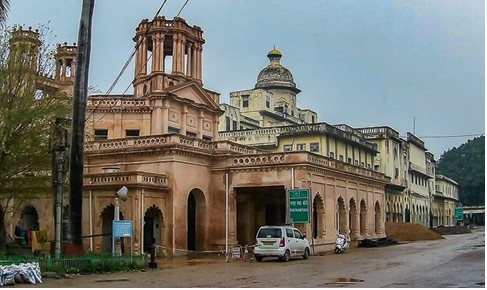
A tale of love, power, betrayal, and legacy from the era of Nawab Wajid Ali Shah still lingers in Lucknow’s memory, reflected in the city’s timeless architecture. These enduring structures stand as silent spectators to a bygone era, keeping alive the rich heritage that continues to define the city’s skyline In the rich and layered history of Wajid Ali Shah, the last Nawab of Awadh, few stories are as dramatic and lesser known as that of his beloved consort, Mashooq Begum, later honored with the title Qaisar Mahal. Mashooq Begum held a special place in the Nawab’s life. Upon the birth of a son, Wajid Ali Shah bestowed upon her the prestigious title of Qaisar Mahal. In her honor, he is said to have developed the grand complex of Qaiserbagh Palace Complex, one of Lucknow’s most iconic architectural landmarks. At the heart of Qaiserbagh stood a magnificent white pavilion known as Qasr ul Aza, surrounded by four imposing gateways. Today, only two of these gates remain, as the other two were destroyed by British forces during the upheaval of the Indian Rebellion of 1857. The Nawab’s affection for Qaisar Mahal extended beyond Qaiserbagh. A historic building originally constructed during the reign of Naseer-ud-Din Haider for his minister Roshan ud Daula, known as Roshan ud Daula Kothi, was later renamed Qaisar Pasand by Wajid Ali Shah, further reflecting his devotion. However, this royal relationship took a dramatic turn. When Wajid Ali Shah was exiled to Kolkata, he took Qaisar Mahal and their son along with him. During this period, the Nawab received a monthly allowance of one lakh rupees from the British government. It is said that Qaisar Mahal conspired with colonial authorities to secure a personal share of five thousand rupees from this stipend. When the Nawab learned of this betrayal, he was deeply hurt. In response, he divorced Qaisar Mahal and ordered the demolition of her palace. In a symbolic act of erasure, even musical instruments like the tabla and harmonium were reportedly buried within the ruins. The Nawab later justified this act by stating that he had elevated her status, but she misused the honor given to her. Historian Zulkifl Rizvi, feels this anecdote remains one of the most intriguing yet lesser discussed narratives of Awadh’s royal history. He notes that the naming of Qaiserbagh after Qaisar Mahal reflects the Nawab’s deep personal attachment, blending romance with architectural legacy. Highlighting  the symbolic significance behind the destruction of her palace and the burial of musical instruments, Rizvi shares, “For a ruler like Wajid Ali Shah, who was deeply connected to art and culture, this act was not just punitive but also a statement meant to resonate with the people of Awadh, the monuments still  standing today are  a grim reminder of that even now betrayal in love can etch the deepest wound.” The story of Qaisar Mahal continues to survive from generation to generation across Lucknow, even as physical traces of her presence have faded over time.  Despite this tragic end, Qaisar Mahal’s legacy remains etched in Lucknow’s heritage. The elegant Moti Masjid, located near Sheesh Mahal, is believed to have been commissioned by her, standing today as a quiet reminder of her once prominent place in Awadh’s royal court. Walking past its remnants, localities but imagine the lives it once held within its walls, the conversations, the elegance, the echoes of a bygone era. Today, it stands more as a memory than a monument, yet it refuses to be completely lost to time. The rise and fall of Qaisar Mahal isn’t just history, it feels personal, like a reminder of how quickly beauty and power can fade, but never truly disappear from a city like Lucknow.
Read more
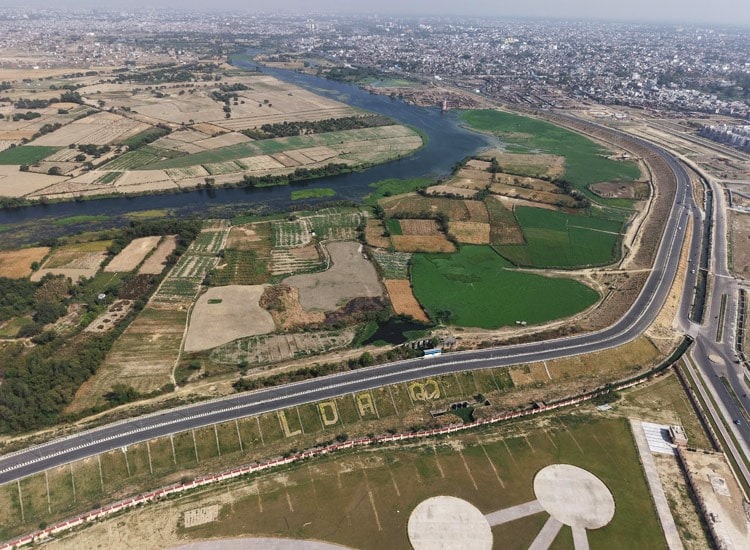
GREEN CORRIDOR: Vision for a Greener Lucknow

Lucknow is undergoing a remarkable transformation with the development of the Green Corridor project, a flagship initiative of the Uttar Pradesh government aimed at creating a balance between modern infrastructure and environmental sustainability. The project reflects the government’s strong vision of making the state capital cleaner, greener, and more commuter-friendly. The Green Corridor spans nearly 28 kilometres, starting from IIM Road and extending up to Kisan Path (Outer Ring Road). A key operational stretch from IIM Road to Hardinge Bridge (Pakka Pul) has already improved traffic movement by providing smoother and largely signal-free travel. In later phases, the corridor connects major areas including Pipraghat Railway Bridge, Samatamulak Crossing, Nishatganj, and Shaheed Path, significantly strengthening connectivity across eastern, central, and western Lucknow. Implemented under the leadership of the Uttar Pradesh Government, the project has been executed by the Lucknow Development Authority (LDA)
Read more

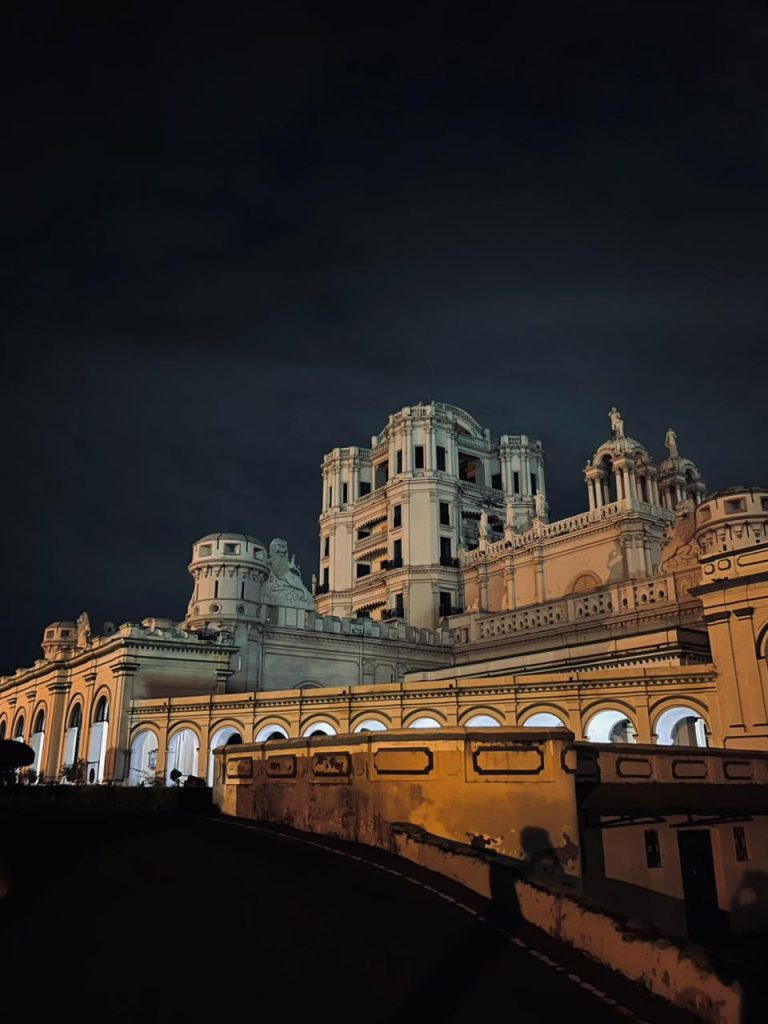
Lucknow’s Crown Jewel

La Martiniere — Grand, dramatic, and steeped in charisma! This legendary institution isn’t just about education—it’s about aura. Towering over time with effortless grace, La Martiniere has mastered something few places ever do: staying relevant while remaining regal.La Martiniere’s magic goes far beyond its looks. This is an institution that has shaped generations—leaders, artists, thinkers, and trailblazers who carry the unmistakable confidence of being Martinian.There’s pride in the air here, polished by tradition and powered by ambition. Creativity and excellence go hand in hand. The institution has churned out many personalities like Nobel laureate R.K. Pachauri, tennis star Leander Paes author S. Allan Sealy, police officers Dushyant Singh & Anuj Sharma , Air Force officer Anubhav Tripathi, and military figures like Lt Gen Bipin Puri.Because of its majestic architecture, the Indian film industry too has a soft spot for La Martiniere. The campus has that rare cinematic quality: timeless, textured, and rich with emotion. Directors love it because it doesn’t need dressing up. The vintage architecture, natural lighting, and old-world charm bring instant credibility to period dramas, elite-school narratives, and intense emotional arcs. When La Martiniere appears on screen, it doesn’t fade into the background—it commands attention.In many films, the location becomes a silent storyteller. A staircase becomes a turning point. A corridor holds tension. A courtyard captures nostalgia. La Martiniere offers all of this effortlessly. It stands in for royal mansions, colonial institutions, and historic estates, lending authenticity that no set design can truly replicate.What makes La Martiniere irresistible to Bollywood is the same thing that makes it legendary in real life: soul. It carries history without being heavy, grandeur without arrogance, and beauty without pretension.In an age obsessed with the new and the now, La Martiniere remains iconic by simply being itself. A place where minds are shaped, stories are born, and cinema finds its perfect frame. Classic. Charismatic. Completely unforgettable.
Read more

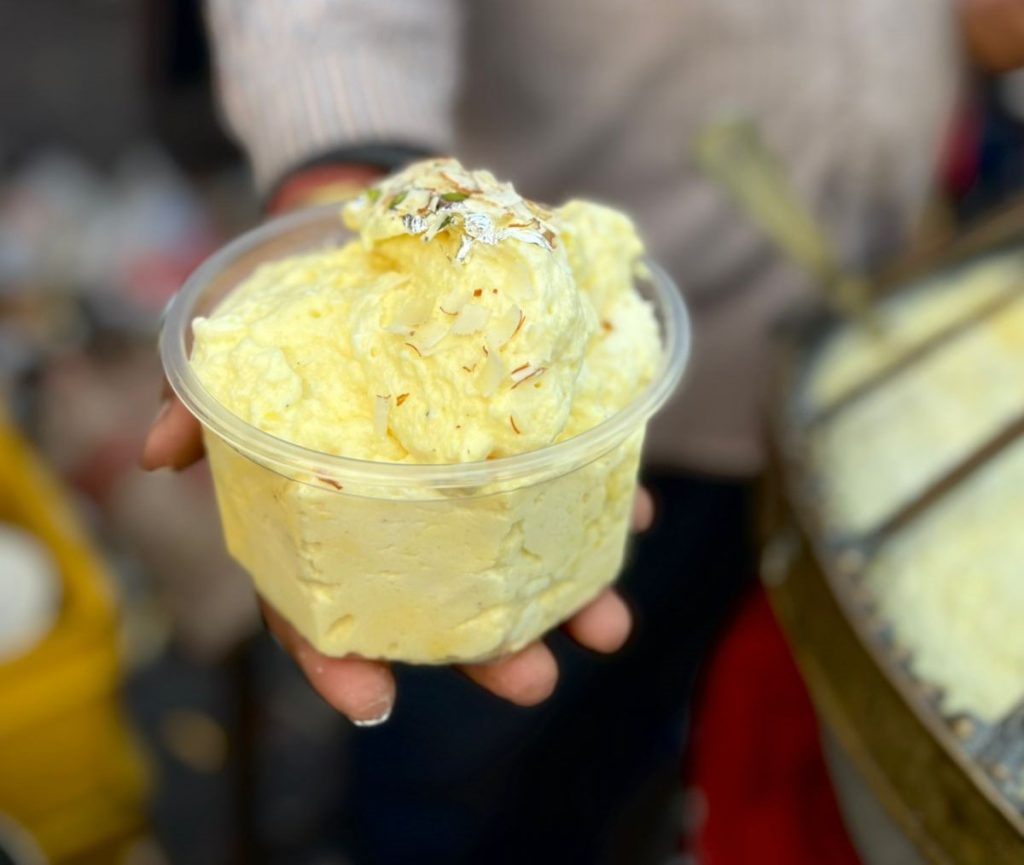
Makhan Malai: Lucknow’s Winter Cloud Dessert

As the temperature drops and fog wraps the city in a soft embrace, Lucknow quietly slips into its most poetic season. Winter here is not announced by calendars, but by flavours. And none captures the essence of the season better than Makhan Malai, also lovingly known as Nimish. This delicate dessert is as much a craft as it is a tradition. Made only when the winter air is cold enough, fresh milk and thick malai are left to rest under the open night sky, allowing nature to do its work. At the break of dawn, the mixture is gently hand whipped for hours, infused with saffron and lightly sweetened, until it transforms into an impossibly airy, cloud like foam. Soft, fragrant, and fleeting, Makhan Malai melts on the tongue almost instantly, leaving behind a whisper of sweetness. Its charm lies in its rarity. You will find Makhan Malai only during winter, typically between November and February, and even then, only for a few hours each day. Vendors usually begin selling it around 8 AM, and by 4 PM, or sometimes much earlier, the day’s batch is gone. Once it sells out, it is gone until the next winter, making every serving feel special. The most authentic way to enjoy Makhan Malai is in the narrow lanes of Chowk and Old Lucknow, where generations of vendors continue the same age old process. Served in small bowls, often topped with finely chopped pistachios and almonds, it is best eaten standing on the roadside, wrapped in a shawl, watching the city wake up around you. More than just a dessert, Makhan Malai is a reminder of Lucknow’s relationship with time. It cannot be rushed, preserved, or replicated out of season. It exists only in the moment, shaped by the cold air, skilled hands, and centuries of culinary wisdom. At Indie Times Coverage, we celebrate these seasonal stories that define the soul of the city. From winter only delicacies to forgotten flavours, we bring you closer to the tastes that make Lucknow timeless.
Read more

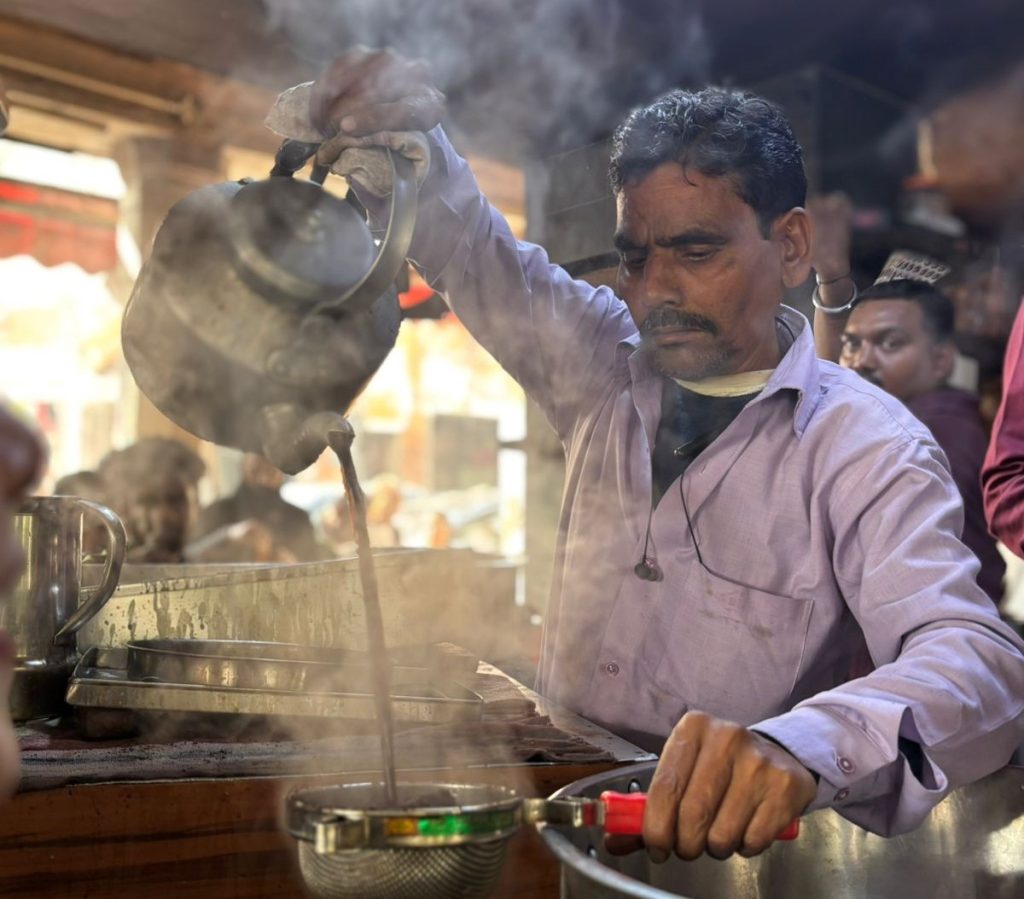
Sharma Ji ki Chai

Sharma Ji ki Chai- Sharma Ji Ki Chai, established in 1949, has been a beloved tea adda in Lalbagh, Lucknow, for three generations. Originally from Aligarh, the Sharma family brought their love for tea to the city, creating a legacy that continues to delight tea lovers today. First Generation: Shri Om Prakash Sharma laid the foundation, turning a humble tea stall into a local favourite. Second Generation: His son, Deepak Sharma, expanded the stall’s reputation, keeping the kadak chai, bun-makkhan, samosas, and mathri alive, while welcoming poets, students, and office-goers. Third Generation: Manav Sharma, grandson of Shri Om Prakash Sharma, now carries forward the family tradition, maintaining the flavours, tehzeeb, and charm for today’s Lucknowis. Over the years, Sharma Ji Ki Chai has hosted political leaders like former PM Shri Atal Bihari Vajpayee, former UP CMs Kalyan Singh & Rajnath Singh, as well as Rahul Gandhi, Priyanka Gandhi, Raj Babbar, and Jyotiraditya Scindia. It has also welcomed Bollywood and culinary stars such as Sanjeev Kapoor, Raghnesh, Kartik Aaryan, and Ananya Panday – a testament to its legendary status. 📍 34, Trilok Nath Marg, Sushanpura (Lalbagh) ⏰ 7:30 AM – 8:00 PM (Mon–Sat) | 7:30 AM – 4:00 PM (Sun) Indie Times Coverage brings you closer to the corners of Lucknow where history, culture, and flavour meet. Sharma Ji Ki Chai is not just a tea stall – it’s a legacy in every cup.
Read more

Recent News

Registered Office

2nd floor, Rohit House, Shah Najaf Road,
Lucknow-226001

Email Us: enquiries@indietimescoverage.news

Contact: +91 522 4343939  |   +91 94735 01234

RNI No: UPENG/25/A3578

Copyright @ 2026 indie times coverage. All Rights Reserved.

Powered by Bito Technologies