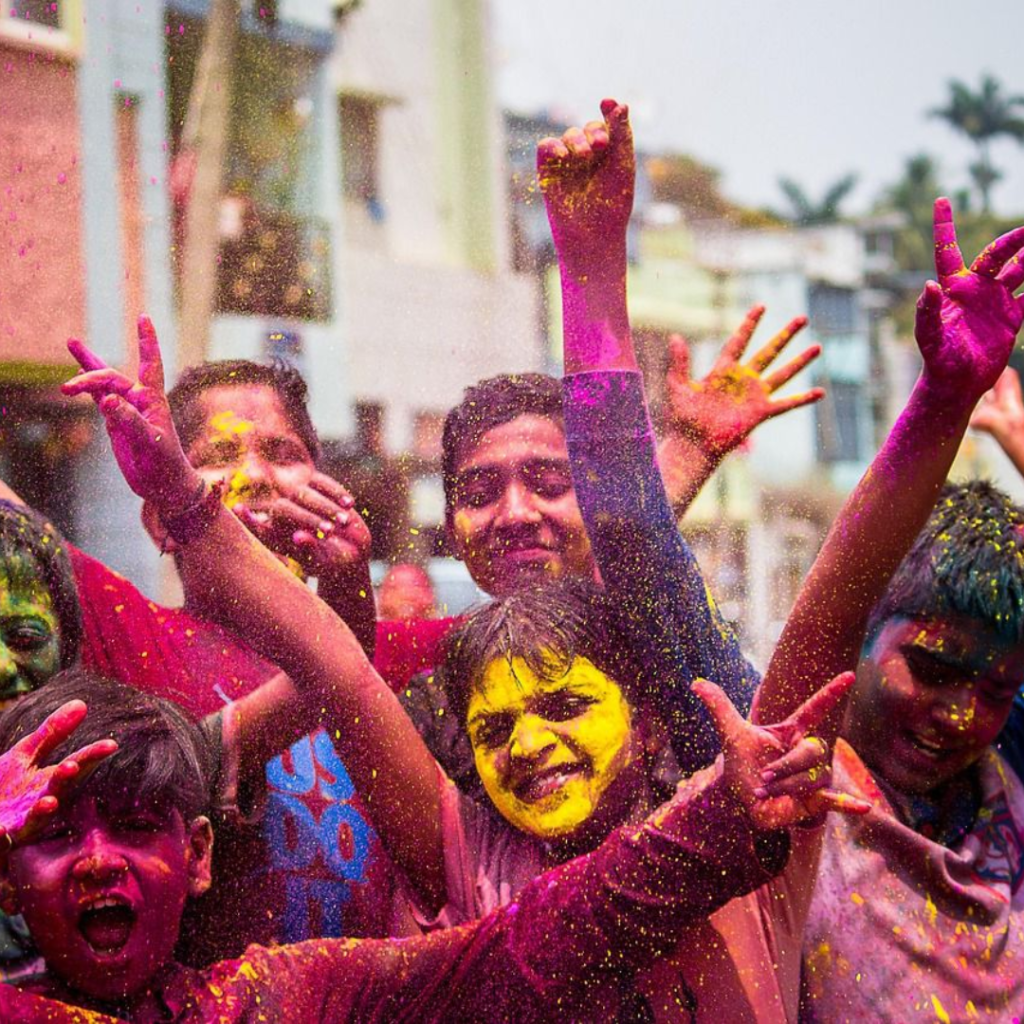
The festival of Holi has held a s special meaning for Lucknow and the erstwhile region of Awadh. Seeped in tradition, the festival of colours has been raising a riot of colour for centuries. Lucknow has been home to a centuries-old tradition that has slipped into oblivion over time. This week, we trace the path of the city’s iconic Holi Baraat, exploring how a royal Nawabi pastime that bore testimony to a symbol of communal harmony and still remains the beating heart of our cultural identity during the festival of colours. Read on.
It’s been an important part of Lucknow’s cultural identity, unmissable during the festival of colours. This quaint tradition is that of the Holi processions, known locally as the Holi Barat. A vibrant testament to the city’s Ganga-Jamuni Tehzeeb, the processions gained popularity during the reign of Nawab Asaf-ud-Daula, who is credited with turning the local festival into a melting pot of celebration where the distinction between the ruler and the ruled dissolved under layers of abeer and gulal.
The tradition is very much alive even today and is organised during Holi by members of the Kshatriya Mahasabha and the Chowk Holi Baraat Committee. Every year, both committees organise a massive carnival of colours that winds through the cobbled lanes of Old Lucknow.
Explains a member of Chowk Holi Barat Committee, “The Holi Baraat starts from the Siddhanath Temple in Chowk, and traverses through Akbari Gate, Victoria Street, and Nakhas.” People keep joining the sepertine procession, playing traditional folks songs, following horse-drawn carriages and open trucks full of people dressed as mythological characters from the pages of history.
A true representation of the uniquely “Lakhnawi Ganga Jamuni Tehzeeb” the procession has participation of all communities. It is a common sight to see members of the Muslim community waiting at the Akbari Gate, welcoming the Hindu procession with flower petals and ittar (perfume).
Never mind that while Holi celebrations in urban sections of Lucknow have shifted toward private club parties and rain dances, the Chowk ki Holi remains the city’s cultural anchor even now bearing testimony to the fact that the spirit of the Nawabs survives in the heart of the old city.
Where to Catch a Glimpse of the Holi Baraat on March 2nd 2026:
10:00 AM: Starts from Koneswar Temple
11.30 AM: Reaches Siddanath Temple Lane
12.30 PM: Reaches Akbari Gate and is welcomed by members of the Muslim Community with ittar and rose petals.